

30 Seconds Summary
- Herringbone uses regular rectangular tiles laid at 90° angles to each other. This creates a broken zigzag pattern that looks classic and adds texture. The tiles meet in a staggered way, not in one clean line.
- Chevron uses tiles cut at a 45° angle, so the ends fit together to form one continuous, perfect V-shape across the surface. This gives a cleaner, sharper, and more modern look.
- Herringbone is usually easier to install and more budget-friendly because it uses standard rectangular tiles. Chevron takes more cutting and precision, so it often costs more.
- Both patterns can go on floors, walls, backsplashes, or furniture. You can use ceramic, porcelain, marble, glass mosaic, or wood-look tiles.
- Use matching grout for a soft look or contrasting grout to show the pattern. Mosaic sheets help make installation faster. Place the pattern to guide the eye and make rooms feel bigger or more interesting.
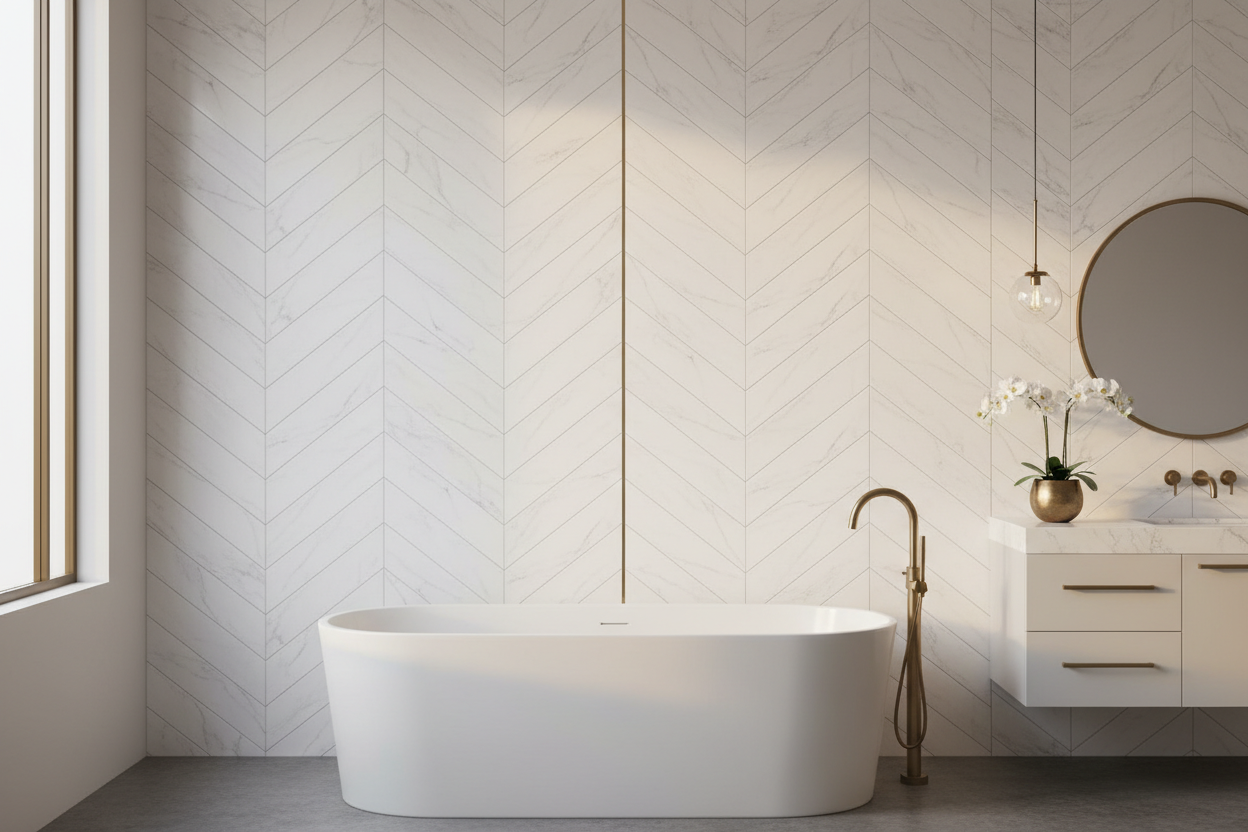
The main difference between herringbone vs. chevron is in the tile shape and the way the tiles meet.
Herringbone uses regular rectangular tiles placed at 90° angles to each other, creating a broken zigzag pattern with a classic, textured feel. On the contrary, chevron uses tiles cut at a 45° angle, so the ends join to form one continuous, perfect V-shape. This gives the pattern a clean, modern, and smooth look.
If you like a timeless and cozy style, choose herringbone. If you want something bold and sleek, chevron is the better choice. Both bring beauty and movement to your space.
Herringbone vs. Chevron: Main Differences at a Glance

Here is the main difference between herringbone and chevron tiles:
|
Feature |
Herringbone |
Chevron |
|
Tile Shape |
Simple rectangles meeting at 90° angles, staggered zigzag (“broken” pattern) |
Parallelograms (or rectangles cut at e.g., 45°) meeting end-to-end to form a continuous V-shape |
|
The Look |
Staggered interlocking zigzag, textured and dynamic |
Clean V-shaped arrow pattern, sharper and more seamless |
|
Installation Difficulty & Waste |
Easier (uses standard rectangular tiles) |
More complex (requires angle cuts or pre-cut chevron tiles) |
|
Cost |
Typically more affordable (less cutting, less waste) |
Typically more expensive (labor & waste higher) |
|
Best Design Style Vibe |
Classic, timeless, textured, cozy |
Modern, sleek, directional, bold |
|
Visual Effect in Rooms |
Adds texture, can help widen or lengthen a room, depending on orientation |
Adds movement, eye-direction, and elongates narrow spaces |
How to Choose the Right Pattern for Your Space
Confused between chevron vs. herringbone? This easy guide will help you decide which tile pattern suits your home best.
For a Modern, Sleek Look: Choose Chevron
If you want your room to feel modern, clean, and stylish, the chevron tile pattern is a great choice.
The V-shaped tile pattern guides the eye forward, creating a sense of movement and energy. It makes spaces like kitchens, bathrooms, or entryways feel lively and bold.
Chevron works especially well in:
- Minimalist or modern kitchens
- Bathrooms with clean lines and simple details
- Hallways or entryways where you want a strong visual statement
Keep in mind: chevron tiles can cost more because of the precise angle cuts and some material waste during installation. Using larger-format tiles or pre-cut chevron mosaics can make installation easier and faster.
Explore the full range of Chevron Tiles at Mosaicenter.
For a Classic, Timeless Feel: Choose Herringbone
If your style is more traditional, cozy, or timeless, the herringbone tile pattern is perfect.
The staggered zigzag tile pattern adds texture and character to your room. It works well for:
- Kitchens and backsplashes
- Living rooms or hallways
- Herringbone wood floor look or wood-look tiles
Herringbone is easier and often cheaper to install because it uses standard rectangular tiles. Its broken layout is also good at hiding dirt or small scratches on floors.
Check out our selection of Herringbone Tiles at Mosaicenter.
If You’re on a Tighter Budget: Consider Herringbone
If you want to save money, herringbone is often a better choice than chevron.
Herringbone uses regular rectangular tiles, which cost less than the specially cut tiles needed for chevron. You also waste less material because fewer angled cuts are needed.
Installation is simpler for many tile installers because they are already used to working with rectangular layouts. This can save on labor costs, too.
Remember, even though herringbone is more budget-friendly, it still needs careful planning. You have to pay attention to layout, grout lines, and alignment to get a neat finish.
For Small or Narrow Rooms: A Chevron Can Make the Space Feel Bigger
If your room is narrow or you want it to feel longer, chevron is a great option.
The V-shaped tile pattern naturally guides the eye along the length of the room, making it feel bigger and more open. It works well in hallways, small kitchens, or narrow bathrooms.
A tip: in very small spaces, chevron can look too busy if the tiles are large or dark. In that case, use smaller tiles or light colors to keep the room calm and open.
Herringbone can also work in small rooms. Using small tiles and subtle tones keeps the pattern stylish without feeling overwhelming.
Herringbone vs. Chevron Tiles in Action
Herringbone and chevron patterns are very versatile. You can use them on floors, walls, backsplashes, and even on furniture surfaces. Let’s look at some examples and tips for shopping for them.
Herringbone Examples
- A marble herringbone backsplash can add texture and a sense of luxury to a plain white kitchen. It creates visual interest without being too bold.
- A wood-look herringbone floor in a living room gives warmth and style. The pattern adds character but keeps the room balanced.
- A herringbone bathroom floor can make the space look bigger if you arrange the tiles in the right direction.
Shopping Tips for Herringbone:
- For a backsplash, use mosaic sheets already arranged in a herringbone pattern. This makes installation easier and faster.
- For floors, choose tile sizes like 4″×12″ or 6″×24″. These fit well with the pattern and space.
Check out mosaic tiles at Mosaicenter for herringbone backsplash options.
Chevron Examples
- A large-format chevron porcelain floor in a modern living room creates a clean, continuous V-shaped pattern. It draws the eye and makes the room feel dynamic.
- A chevron marble bathroom floor with angled cuts adds elegance and reflects light beautifully, giving the space a dramatic look.
- A chevron accent wall can be a bold statement in a foyer or behind a bathroom vanity, adding modern style.
Shopping Tips for Chevron:
- Use pre-cut chevron tiles or work with a professional installer who knows how to cut at a 45° angle.
- Think about grout color: matching grout makes the pattern look smooth, while contrasting grout highlights the V-shaped design.
A Few More Notes on Materials & Practical Factors
Materials & Finishes
Both herringbone and chevron patterns work well with many materials: ceramic, porcelain, natural stone like marble or travertine, glass mosaics, and wood-look tiles.
- For areas with water, like bathrooms, showers, or outdoor spaces, porcelain is best because it is strong and water-resistant.
- For a herringbone wood-look floor, you can use engineered hardwood or luxury vinyl planks. The pattern looks natural and warm in wood styles.
- For backsplashes, using mosaic sheets in herringbone or chevron makes installation faster and easier.
Installation Terms & Cost Considerations
- Angle cuts:
Chevron usually needs tiles cut at angles, often 45°, to form the perfect V-shape. Herringbone usually uses plain rectangles and does not need angled cuts.
- Waste:
Complex cuts create more waste. This means chevron can be more expensive than herringbone because more material is needed.
- Grout lines:
Both patterns show many grout lines. You can choose grout color to control the look:
- Matching grout gives a soft, subtle effect.
- Contrasting grout makes the pattern stand out.
- Labor:
Installation needs precision. Tiles must be aligned carefully, and the center-line layout and spacing should be exact. A messy installation can ruin the zigzag effect.
- Edge treatment & borders:
Think about how the pattern meets walls, cabinets, or islands. You may need border tiles or trim to finish edges neatly.
Room Size & Orientation
- Large rooms:
Both patterns work well. Herringbone adds texture and a classic feel. Chevron creates a clean, sweeping visual effect across the floor.
- Narrow corridors or entryways:
Use the pattern to guide the eye along the space. Chevron’s arrow-like shape naturally draws the eye down the corridor. Herringbone can also be oriented so the points run along the length for a similar effect.
- Small bathrooms:
Smaller tiles are better to avoid a busy look. Mosaic sheets in herringbone or chevron floor tile help make the pattern easier to install and look balanced.
Frequently Asked Questions About Herringbone & Chevron
Q: What is the main difference between herringbone and chevron?
A: The difference is in the tile shape and how they are placed. Herringbone uses plain rectangular tiles placed at right angles (90°) in a staggered zigzag. Chevron uses tiles cut at an angle, usually 45°, and laid end-to-end to make a continuous V-shape.
Q: Is herringbone or chevron more modern?
A: Chevron looks more modern because of its clean, sharp V-shape. Herringbone feels classic and timeless with its textured, interlocking look.
Q: Which is more expensive, herringbone or chevron?
A: Chevron usually costs more. It needs angled cuts or special pre-cut tiles. This can create more waste and higher labor costs compared to herringbone.
Q: Is herringbone harder to install than chevron?
A: Chevron is usually harder to install because the angles must match perfectly. Herringbone is simpler because it uses standard rectangles and creates less waste.
Q: How can you tell the difference between chevron and herringbone?
A: Look at the shape and layout. If the tiles form a continuous point-to-point V, it is a chevron. If the tiles are rectangles placed in a broken zigzag, it is herringbone.
Q: What angle is a chevron pattern?
A: Most chevron tiles are cut at a 45° angle on each end. Some designs may use other angles, but 45° is most common.
Q: Do you cut tiles for a herringbone pattern?
A: Usually, no special cuts are needed. Herringbone uses standard rectangles. Sometimes, tiles need trimming at edges or borders, but not angled cuts like chevron.
Q: Should I choose herringbone or chevron for a small room?
A: If you want the room to look longer, chevron works well because the V-shape guides the eye along the space. If you want classic texture and easier installation, herringbone is a good choice. Use smaller tiles to avoid overwhelming the room.
Q: Which pattern is better for a kitchen backsplash?
A: Both work well. Use herringbone for a subtle, classic look behind cabinets. Use a chevron for a bold, modern statement that draws attention.
Q: What does the herringbone pattern look like?
A: Herringbone looks like rectangles arranged in a broken zigzag. Each tile end meets the side of another at 90°, creating a pattern that looks like fish bones; this is why it’s called herringbone.
Over to You
Both the herringbone tile pattern and the chevron tile pattern are beautiful and timeless. They add texture, movement, and interest to floors, walls, and backsplashes. Choosing the right one depends on three things: style, budget, and space.
- If you like modern, sleek, and dramatic designs and don’t mind spending a bit more with a skilled installer, choose chevron. Its clean V-shaped pattern draws the eye and creates a bold look.
- If you prefer classic elegance, easier installation, and lower cost, choose herringbone. Its staggered rectangles give a warm, textured feel that works in many spaces.
No matter which pattern you pick, place the tiles carefully. Think about how people move through the room, where the focal points are, and how light will shine across the tiles.
Choose the right tile pattern for your project!
Visit Mosaicenter for all your tile needs.

Halil I Oguz
Founder & Tile Expert
Halil I Oguz is the founder of Mosaicenter, the natural stone and porcelain tile supplier he launched in 2018 and now runs across the United States and Canada.
He leads the company's product selection and writes its technical library, covering DCOF slip ratings and ADA compliance, TCNA installation standards, and the selection and care of natural stone.
His work as a founder has been featured in Authority Magazine. Read full bio →

Leave a comment
This site is protected by hCaptcha and the hCaptcha Privacy Policy and Terms of Service apply.