






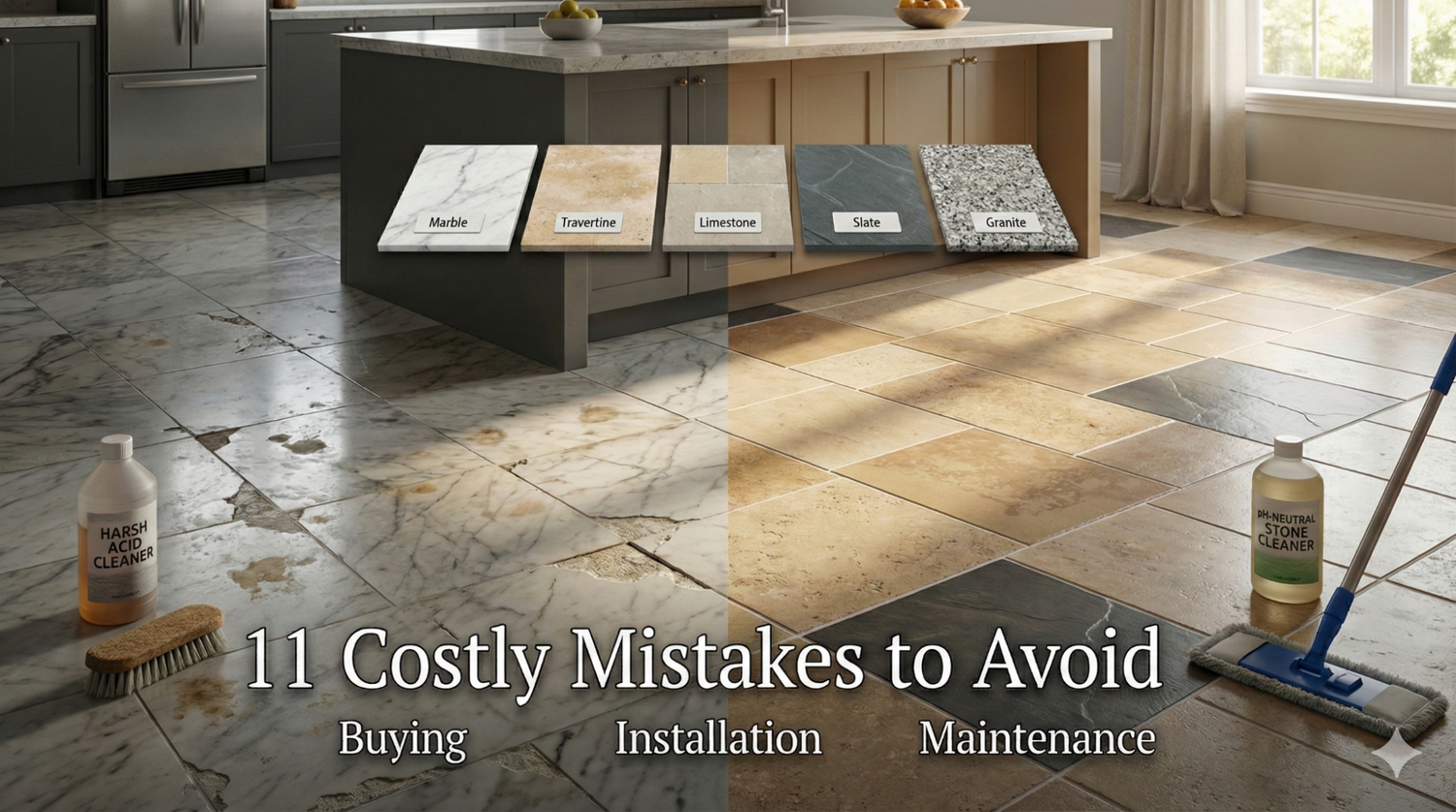
30 Seconds Summary
- Choosing the right natural stone and finish is important because honed, polished, and tumbled surfaces behave differently and must match your lifestyle and the level of foot traffic.
- You should plan your purchase carefully by ordering extra tiles and sticking to a single batch to avoid noticeable color or pattern differences.
- Proper installation is essential, including using the correct adhesives, pre-sealing before grouting, and using leveling systems to prevent uneven edges and damage.
- Maintaining natural stone correctly is also necessary, so only use pH-neutral cleaners, avoid harsh chemicals or steam mops, and reseal when needed to keep your stone looking beautiful.
Natural stone has a look that manufactured materials simply can’t copy. Every tile has its own color shifts, veins, and texture, which is exactly why homeowners fall in love with it. When installed correctly, natural stone adds long-term value and a sense of quality that lasts for decades.
But that beauty comes with responsibility.
Unlike ceramic or porcelain tiles, natural stone is a living material. It reacts to moisture, heat, foot traffic, and even the cleaning products you use. Marble can be etched with something as simple as lemon juice. Limestone can darken when it absorbs water. Travertine can trap dirt if it isn’t filled and sealed correctly. These aren’t defects; they’re natural characteristics.
The problem starts when the stone is treated like a regular tile, which can lead to staining, dull spots, cracking, or permanent surface damage. And once the stone is damaged, fixing it is rarely cheap.
That is exactly why we have created this natural stone tile guide. It will help you make confident, informed decisions before you buy, install, or maintain it.
A Quick Guide to the 6 Most Popular Natural Stone Tiles
Before learning about the costly mistakes, it is important to understand the main types of natural stone. Each stone looks different, feels different underfoot, and reacts differently to daily use.
Knowing what you are working with makes every decision easier, from choosing the right natural stone to planning maintenance later on.
Here’s a simple breakdown of the most commonly used natural stone tilesand where they work best.
|
Stone Type |
Key Characteristics |
Best For |
|
Marble |
Elegant, classic look with natural veining. Softer and porous, which means it can scratch and stain if not sealed well. |
Bathroom walls, shower surrounds, fireplaces |
|
Travertine |
Earthy appearance with natural pits and warm tones. Often filled and honed for smoother surfaces. |
Floors, patios, outdoor spaces (honed finish) |
|
Limestone |
Soft, sedimentary stone with a consistent color. More absorbent than granite or slate. |
Low-traffic floors, bathroom walls, backsplashes |
|
Slate |
Rustic and textured with natural grip. Durable and has lower porosity than many other stones. |
Entryways, patios, fireplaces |
|
Granite |
Extremely hard and dense. Highly resistant to stains and scratches when sealed properly. |
Kitchen countertops, high-traffic floors |
|
Onyx |
Translucent, dramatic, and delicate. Not made for heavy use. Chosen for its visual impact. |
Accent walls, decorative or backlit features |
Each of these stones has a different durability level, porosity, and maintenance need. Treating them all the same is one of the biggest mistakes homeowners make.
And that’s where problems begin.
Let’s walk through the most costly mistakes, starting with what often goes wrong during the buying stage.

Shop Marble tiles from Mosaicenter.
Part 1: Buying Mistakes to Avoid
Mistake #1: Choosing the Wrong Finish for Your Lifestyle (Honed vs. Polished)

The Problem:
One of the biggest mistakes people make is choosing a finish without thinking about how the stone will be used. A polished marble floor, for example, may look stunning in a showroom or in photos, but in a busy kitchen or entryway, it can quickly show scratches and dull marks. Acidic spills like lemon juice, tomato sauce, or even wine can leave permanent etching, and high foot traffic can make it wear faster.
The Expert Solution:
The finish you choose matters just as much as the stone itself.
- Polished stone is shiny and reflective, perfect for walls or low-traffic areas, but it shows scratches and etching easily.
- Honed stone has a matte finish that hides minor damage, gives you slip resistance, and is much more forgiving on floors.
- Tumbled stone has a natural, rustic texture that works well for casual or outdoor areas and adds traction underfoot.
For floors, especially kitchens, bathrooms, and entryways, you must always check the DCOF slip resistance rating. A higher DCOF means better traction and safer walking, especially when the floor is wet.
Explore our collection of natural stone tiles for the floor at Mosaicenter.
Mistake #2: Ignoring Batch Variation & Overage
The Problem:
Another common mistake is underestimating the natural variation in stone. Unlike ceramic or porcelain, natural stone comes directly from quarries, so each tile has its own unique pattern, color, and texture. If you order only the exact amount you need and then run out midway through your project, the new tiles may not match the original batch. This can leave your floor or wall looking uneven or patchy.
The Expert Solution:
The best practice, which every buying natural stone tile guide recommends, is to:
- Order 15–20% extra tile to cover cuts, waste, and future repairs
- Make sure all tiles come from the same batch or lot number
- Dry-lay tiles before installation to balance color and veining across the space
Mistake #3: Underestimating the Importance of Stone Grade
The Problem:
Many homeowners are tempted by lower-priced stone that looks good online. However, the cost of natural stone tile is often a reflection of its quality. Low-grade stone can arrive with cracks, weak spots, heavy fillers, or uneven thickness. These flaws affect not only appearance but also durability. Tiles can break during installation or fail earlier than expected, turning what seemed like a bargain into an expensive problem.
The Expert Solution:
Natural stone is graded by quality. While grading systems vary, they generally follow this structure:
- Grade A: High quality. Minimal flaws. Consistent color and thickness. Best for visible areas.
- Grade B: Small natural variations, but still strong and usable.
- Grade C / D: Visible defects, heavy fillers, or weak areas. Higher risk of damage.
Looking for high-quality outdoor options? Check out our natural stone tiles for patio at Mosaicenter.
Part 2: Installation Mistakes to Avoid
Following the right installing natural stone tile tips can save you time, money, and frustration, so your stone looks flawless and lasts for decades.
Mistake #4: Not Sealing Before Grouting

The Problem:
One of the most common installation errors is skipping the “pre-seal” step before grouting. Natural stone is porous, meaning grout or adhesive can easily penetrate the surface and leave permanent stains.
The Expert Solution:
Always apply a sealing natural stone tile product before grouting. A pre-seal creates a protective barrier that keeps grout from being absorbed into the stone while still allowing the stone to breathe. Once the grout has set, you can apply a final top coat of sealer for extra protection.
Mistake #5: Using the Wrong Adhesive or Mortar
The Problem:
Using gray mortar under light stones can cause tiles like marble to turn gray or dark after installation.
The Expert Solution:
Use a white, polymer-modified thin-set for light-colored stones. This prevents discoloration while providing strong adhesion. Always follow manufacturer guidance.
Mistake #6: Not Planning for Lippage

The Problem
Lippage occurs when adjacent tiles sit at different heights. Stone varies more than ceramic, creating uneven edges and trip hazards.
The Expert Solution
Use a tile leveling system and check with a level during installation. This keeps tiles flush and creates a smooth, professional finish.
Mistake #7: Not Filling Travertine Voids Correctly
The Problem:
Travertine has natural pits. Leaving them unfilled can trap dirt and make cleaning hard.
The Expert Solution:
You should fill voids with a color-matched filler before sealing. This keeps surfaces smooth and easy to maintain while also preserving the natural look of the stone.
Check out Limestone tiles from Mosaicenter for low-traffic areas where easy installation and uniformity matter.
Part 3: Maintenance Mistakes to Avoid
Proper natural stone maintenance is essential to keep your floors and walls looking beautiful for years, and to prevent staining, etching, or damage.
Mistake #8: Using the Wrong Cleaner (The Vinegar & Bleach Disaster)

The Problem:
Many homeowners make the mistake of using harsh cleaners like vinegar, bleach, or citrus-based products on natural stone. These acids can etch soft stones like marble and limestone, leaving dull spots and permanent damage. Even common household detergents can strip sealers over time.
The Expert Solution:
Always use a pH-neutral cleaner specifically formulated for natural stone. These cleaners maintain the stone’s finish and protect against etching or staining. Microfiber cloths or soft mops are ideal tools.
Mistake #9: Misunderstanding What a Sealer Does
The Problem:
Many people think that sealing a stone floor makes it completely waterproof and indestructible. This misconception leads to spills causing stains or permanent damage.
The Expert Solution:
Remember that sealing natural stone tiles creates a stain-resistant barrier, not a stain-proof or a waterproof shield. Sealers slow water absorption but cannot make the stone impervious. This is why seals should be reapplied according to the stone type and usage.
Mistake #10: Re-sealing Too Often or Improperly
The Problem:
Over-sealing or applying sealers incorrectly can leave a milky, hazy finish. Many homeowners panic and keep adding product, which further worsens the issue.
The Expert Solution:
Test your sealer with a water bead test: sprinkle a few drops on the stone. If water beads, the seal is still effective. If it soaks in, it’s time to reseal. Always follow manufacturer directions for coverage and drying time.
Mistake #11: Using a Steam Mop
The Problem:
Steam mops generate high heat and moisture, which can damage the sealer and force water into porous stones like travertine or limestone. This can lead to staining, etching, or even delamination over time.
The Expert Solution:
Use a microfiber mop with a pH-neutral cleaner instead. Gentle cleaning preserves the sealer and keeps your stone safe. Avoid steam, abrasive pads, or strong chemicals.
For floors that are both beautiful and durable, shop Travertine tiles from Mosaicenter.
Your Specific Questions, Answered
Buying:
Q: Is a 'honed' or 'polished' finish better for a high-traffic kitchen floor?
A: Honed is always better as it hides scratches and is less slippery than polished.
Q: Does natural stone tile actually work with radiant heated floors, or will it crack?
A: Yes, it will work because stone handles heat well if installed correctly with flexible adhesive.
Q: Can I really use marble tile on a shower floor, or is it too slippery?
A: You can, but choose honed or textured marble. It reduces the risk.
Q: Will my limestone bathroom floor stain if I dye my hair in the shower?
A: Possibly, limestone is porous, so spills or dyes can leave marks.
Q: Is the extra cost for 'rectified' stone tile actually worth it?
A: Yes, if you want straight edges and minimal grout lines. It looks cleaner.
Q: Can I mix stone tiles from two different lots if I run out halfway through?
A: It is not recommended because the colors and patterns may not match, causing visible differences.
Installation:
Q: Why are my natural stone tiles 'lipping' (sticking up) at the edges more than my ceramic ones?
A: This is because stone tiles vary in thickness compared to the ceramic tiles. You need leveling systems to fix lippage.
Q: Why are there tiny holes in my travertine tile? Should those be filled with grout?
A: Yes, the tiny holes in travertine tiles should be filled with color-matched filler to keep a smooth, clean surface.
Q: Do I need to soak my stone tiles in water before laying them?
A: No, most stones do not need soaking. Always check the manufacturer's instructions before laying your tiles.
Q: Why did my white marble tiles turn gray/dark a few days after installation?
A: The gray color often comes from dark thin-set or adhesive showing through.
Q: Why do my stone tiles sound 'hollow' when I tap on them?
A: Air gaps beneath the tiles make them should hollow when you tap on them. It can be easily fixed by proper leveling and using the correct thin-set.
Maintenance:
Q: Why is my stone sealer peeling and looking milky?
A: Too many coats or a dirty surface can be the reason behind this. Clean and reseal lightly.
Q: How do I remove 'grout haze' from natural stone without using acid?
A: Use a pH-neutral cleaner and a soft cloth. Avoid harsh scrubbing.
Q: Why is my slate floor 'shedding' or flaking layers?
A: Slate naturally flakes. When cleaning your slate floors, avoid harsh cleaners and use gentle mops.
Q: Does sealing natural stone make it waterproof or just stain-resistant?
A: It makes stone stain-resistant, not waterproof. This means spills can still soak into the floor and stain it.
Q: Can I use a steam mop on sealed travertine floors?
A: No, steam can damage the sealer and stone. You should use a microfiber mop instead.
Q: How often do I actually need to reseal granite floors?
A: You should reseal every 1–2 years, depending on traffic and stone type.
Q: What is the best way to clean pet accidents off porous stone tile?
A: Blot spills immediately, then clean with a pH-neutral solution. Rinse and dry well.
Over to You
Natural stone is a beautiful and timeless material, but it requires care and attention. With this natural stone tile guide, you now know how to choose the right stone, avoid costly mistakes, install it correctly, and maintain it for years of lasting beauty.
Check out natural stone tiles at Mosaicenter and find the perfect stones for your home today.

Halil I Oguz
Founder & Tile Expert
Halil I Oguz is the founder of Mosaicenter, the natural stone and porcelain tile supplier he launched in 2018 and now runs across the United States and Canada.
He leads the company's product selection and writes its technical library, covering DCOF slip ratings and ADA compliance, TCNA installation standards, and the selection and care of natural stone.
His work as a founder has been featured in Authority Magazine. Read full bio →


Leave a comment
This site is protected by hCaptcha and the hCaptcha Privacy Policy and Terms of Service apply.