





30 Seconds Summary
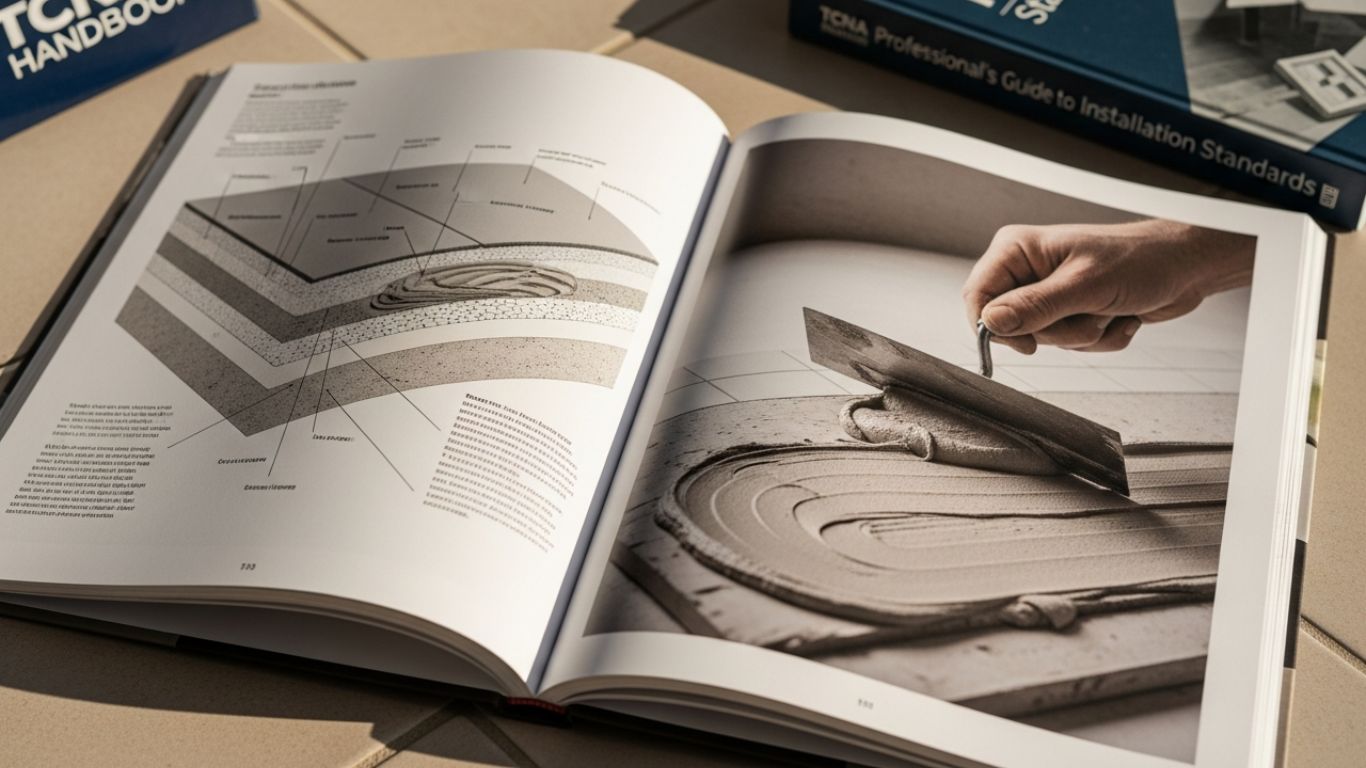
- The TCNA Handbook explains how tile should be installed so problems like cracks, leaks, or loose tiles are avoided.
- Tile installation must follow standards for surface prep, mortar coverage, waterproofing, movement joints, and flatness.
- TCNA works with ANSI standards for tile, so quality materials and proper installation methods are used together.
- Proper tiling protects homes and businesses and makes floors and wet areas last longer.
Tile problems can be frustrating, expensive, but most of all, they are avoidable. Cracked floors, uneven tiles, leaking showers, and loose corners are usually the result of not following proven installation rules. This is why the TCNA Handbook exists. It is the industry standard that many professionals use across the U.S.; these standards prevent failures during installationa nd protect both the work and the materials. The TCNA tile standards give clear guidance on how tile should be installed so it remains durable for years.
In this guide, we are going to discuss the most common tile installation standards. You will learn how the TCNA handbook works, how it connects with ANSI requirements, and how these standards help avoid common jobsite problems.
Key TCNA Standards at a Glance
The TCNA Handbook defines minimum mortar coverage based on where the tile is installed. Dry areas, wet areas, and exterior spaces all have different requirements to make sure tiles are fully supported and bonded for long-term performance.
TCNA standards require properly placed movement joints to allow tile installations to expand and contract. Following methods like EJ171 helps prevent cracking, tenting, and grout failure over time.
Tile must be installed over a properly prepared substrate that meets specific deflection limits. These limits vary between ceramic tile and natural stone and are critical to preventing cracked tiles and grout.
TCNA references ANSI guidelines that define acceptable lippage levels based on tile size and edge type. These standards set clear expectations for flatness and finished appearance. |
If you are planning a new tile installation, check out Mosaicenter’s wide range of ceramic tile options.
TCNA vs. ANSI: What's the Difference?

TCNA and ANSI work together, but they are not the same thing. ANSI sets the national standards for how tile products and installation materials must perform, while the TCNA shows professionals how to apply those standards in real projects. You can think of ANSI as defining the rules, and the TCNA Handbook as explaining how to follow those rules on the jobsite.
ANSI standards for tile, such as ANSI A108 and ANSI A118.4, define minimum performance requirements for mortars, grouts, membranes, and installation materials. These standards make sure products meet basic quality and safety expectations before they are used. The TCNA Handbook then builds on those standards by providing clear, illustrated installation methods for floors, walls, wet areas, and exterior applications. In practice, professionals rely on both documents together to make sure tiles are installed correctly, meet industry standards, and hold up over time.
Critical Standards for Shower & Wet Area Installations
Showers and wet areas are where tile installations are tested the most. Water exposure, daily use, and temperature changes make these spaces unforgiving when standards are ignored. The TCNA standards for shower installation focus on building a complete system that controls water, protects the structure, and allows moisture to exit safely. Most shower failures happen because one layer of this system is missing or installed incorrectly.
Before getting into specific details, TCNA standards for showers are built around a few core principles:
- Rigid substrates are required to support tile and prevent movement that leads to cracks.
- Continuous waterproofing membranes must be installed behind the tile, not just rely on grout or cement board.
- Sloped surfaces and proper drainage make sure that water moves toward the drain instead of pooling behind the tile.
- Approved TCNA methods, such as B421 and B422, define the correct order and materials for each shower type.
When these basics are followed together, the showers are able to manage water the way it is designed to, rather than trapping it where damage begins.
Is a Waterproofing Membrane Required for Shower Walls?
Yes, TCNA Method B422 specifies that a continuous waterproofing membrane is required for shower walls. This membrane is installed over the substrate and behind the tile to stop water from reaching the framing and insulation. Tile and grout are not waterproof, and cement board alone does not block moisture. Without a membrane, water slowly moves through the system and causes mold, rot, and structural damage that may not show up for years.
Standards for Mortar Coverage and Substrate Preparation
Mortar coverage and substrate preparation are just as important as waterproofing in wet areas. TCNA standards require a minimum of 95% mortar coverage in showers, with full support at tile edges and corners. This prevents voids behind the tile where water can collect and weaken the bond. Poor coverage is one of the most common reasons tiles loosen or crack over time.
Substrates must also be flat, clean, and rigid before any tile is installed. Surfaces that flex, dip, or contain debris can’t be properly bonded and fail early.
For shower floors and walls that stand up to moisture, check out Mosaicenter’s beautiful natural stone tile collections.
TCNA Requirements for Tile Floors & High-Traffic Areas
Tile floors are rigid, which means they depend on the structure beneath them for long-term use. When a floor system flexes under normal use, that movement is directly transferred into the tile and grout. This is the reason why the condition of the substrate is more important than the tile itself in the TCNA requirements for tile floors. In most failed installations, the problem is not the tile but the floor system underneath that was never evaluated for strength, flatness, or movement control.
Before you start installing the tiles, the TCNA handbook requires you to make sure that the floor meets certain conditions:
- The surface must be flat enough for the tile size.
- The structure must be rigid enough to limit deflection.
- Movement must be planned, not ignored.
- Existing cracks must be addressed, not tiled over.
If you skip any of these steps, your tiled floor will not last for long, no matter how good it looks on day one.
Acceptable Lippage Standards (TCNA Guideline)
Lippage is the difference in height between two tiles that touch each other. Too much lippage looks bad and can be dangerous in busy areas. The TCNA tile lippage standards have clear limits so that installers, designers, and owners know what is acceptable.
Lippage limits depend on three things:
- Tile type
- Grout joint width
- Actual warpage of the tile being used
The standards assume the floor is already flat. If it is not, lippage becomes unavoidable.
TCNA / ANSI Lippage Guidelines
|
Tile Type |
Grout Joint Size |
Maximum Lippage Allowed |
|
Ceramic or Porcelain |
Less than 1/4 inch |
1/32 inch + actual tile warpage |
|
Ceramic or Porcelain |
1/4 inch or wider |
1/16 inch + actual tile warpage |
|
Natural Stone |
Any size |
1/32 inch |
Here are some of the important things you should watch out for while installing tiles:
- Large-format tiles show lippage more easily
- Direct sunlight makes even small edges visible
- Warped tiles increase total lippage, even on flat floors
- Mockups let you see what the tiles will look like before full installation
It is important to remember that you will only be able to control lippage with surface prep, not with spacing tricks.
Substrate Deflection and Crack Isolation Membranes

Tile cracks when the floor bends. This bending is called deflection. The TCNA Handbook defines maximum allowable deflection to prevent cracking. Ceramic and porcelain tile installations must meet a deflection limit of L/360, while natural stone requires a stricter L/720. Stone needs more support because it breaks more easily.
Even when your floor meets deflection limits, if there are existing cracks in the concrete, they can still transfer into the tile. This is where a crack isolation membrane becomes necessary. TCNA methods, along with ANSI A118.12, allow these membranes to handle small movements in the floor and keep cracks from showing through the tile. They do not repair structural issues, but they do help protect the finished surface from normal concrete movement.
Crack isolation membranes:
- Bond to the substrate
- Absorb small in-plane movement
- Protect tile from minor concrete cracks
- Must meet ANSI A118.12 standards
What they do not do:
- Fix structural problems
- Handle wide or active cracks
- Replace movement joints
TCNA makes it clear that movement joints are still required. Crack isolation helps control damage, but expansion and contraction must still be planned using proper joint placement.
The Importance of Movement Joint Requirements
Movement joints are one of the most common reasons tile installations fail when they are missing or installed incorrectly. Tile expands and contracts with changes in temperature, moisture, and normal building movement. The TCNA movement joint requirements exist to give the tile space to move without cracking, lifting, or breaking loose from the surface.
To prevent this, the TCNA tile installation standards clearly show where movement joints must be placed. These joints are not optional and should be planned before tile work begins.
Movement joints are required in the following locations:
- Along all perimeters where tile meets walls, cabinets, or other fixed surfaces
- At every change in plane, such as floor-to-wall or wall-to-wall corners
- Directly over any control or expansion joints in the concrete below
- Across large floor areas, with spacing reduced for exterior tile and wet areas
These joints must stay free of mortar and grout and be filled with a flexible sealant that meets ANSI standards for tile applications. This lets the joint compress and expand as the structure moves.
Specific Standards for Large Format Tile (LFT)
Large-format tiles look clean and modern, but they are less forgiving than smaller tiles. That’s why the TCNA large-format tile standards are strict. If these rules are ignored, problems like lippage, loose tiles, or cracks are very common.
Here’s what matters most:
- Very flat surfaces are required: Floors and walls must be almost perfectly flat before tiling. Under tile installation standards and ANSI A108, the surface should not vary more than 1/8 inch over 10 feet. Any dips or bumps must be fixed during substrate preparation.
- High mortar coverage is critical: Large tiles must have at least 95% mortar coverage. This usually means spreading mortar on the surface and on the back of the tile. Poor coverage is a major cause of failure under TCNA requirements for tile floors.
- Special mortars must be used: Standard thinset is often not enough. Installers use large-and-heavy-tile mortars that meet ANSI A118.4 or higher. These mortars support the tile better and reduce stress.
- Movement and deflection matter more: Since the tiles are bigger, any floor movement or deflection shows up faster. Following the TCNA movement joint requirements helps protect the tile over time.
In short, large-format tiles demand more care. Flat surfaces, the right mortar, and proper coverage are not optional; they are essential for a long-lasting install.
Add a modern touch to your wet area or accent wall with Mosaicenter’s stylish glass tile collection.
TCNA Standards for Exterior Tile Installations

Exterior tile has to face tough conditions like rain, snow, temperature changes, and freeze-thaw cycles. The TCNA standards for exterior tiles make sure outdoor tiles last longer by focusing on water management, proper surface prep, and the right materials. When these rules are not followed, it can often lead to cracking, delamination, or even tile failure.
Here are some of the main standards that matter the most:
- Water Management: Surfaces must slope for drainage, and waterproof membranes should be used.
- Flat Surface: Standard tiles: 1/4" flat over 10 ft; large/heavy tiles: ≤1/8" flat.
- Mortar & Materials: Tiles need 95% mortar coverage and exterior-rated thinsets and grout.
- Methods: Use TCNA methods F101/F102 for walkways, F103/F104 for decks/balconies.
TCNA Standards FAQ
Q: What are the TCNA standards for tile?
A: TCNA standards explain how tile should be installed the right way. They cover surface prep, mortar coverage, waterproofing, movement joints, and layout so tiles do not crack, lift, or leak over time.
Q:Is a waterproofing membrane required for shower walls?
A: Yes, TCNA standards require a waterproofing membrane behind the shower wall tile, as the membrane stops water from damaging the wall.
Q: How much lippage is acceptable for tile?
A: For most ceramic or porcelain tile, lippage is usually about 1/32 to 1/16 inch, depending on grout size and tile type.
Q: Why did my new tile floor crack?
A: Most cracks happen because the floor moved. This can be from poor surface prep, no movement joints, too much bending (deflection), or tiling over cracks without a crack isolation membrane.
Q: What is the TCNA method F141?
A: TCNA Method F141 is a standard method for installing tile over a concrete floor with cracks. It uses a crack isolation membrane to help stop small cracks from moving into the tile.
Over to You
Most tile problems happen when basic rules are ignored. The TCNA Handbook shows the right way to prepare surfaces, manage water, and control movement. Following the TCNA tile standards helps prevent cracks, leaks, and loose tiles. When the standards are followed, your tile floors will last longer.
Learn about different types of tiles and how to choose the right one with Mosaicenter.
Shop tiles from Mosaicenter.

Halil I Oguz
At Mosaicenter's, Halil I Oguz brings a unique blend of strategic insight and creative flair to our digital experience. As our dedicated Content Strategist, he masterfully curates the online journey, allowing the inherent quality and design artistry of our premium tiles to truly shine.
From showcasing the intricate patterns of our mosaics to detailing the robust, scratch-resistant and water-resistant finishes of our porcelain and natural stone, Halil crafts content that is both informative and deeply engaging.
His work empowers Mosaicenter's clients to confidently select from our extensive range, helping them transform spaces with tiles that reflect both enduring style and practical excellence.

Leave a comment
This site is protected by hCaptcha and the hCaptcha Privacy Policy and Terms of Service apply.