

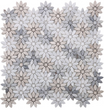
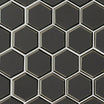
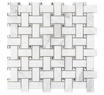
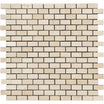
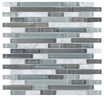
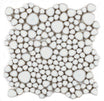
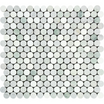

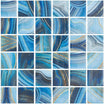
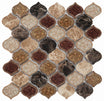
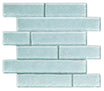


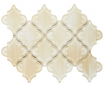
Shop Natural Stone by Color
Choosing a Natural Stone Tile Color
Colour in natural stone is not printed on — it is the mineral content of the stone itself. Iron gives travertine its warm rust and gold tones, carbon and bitumen make marble read black, and serpentine turns it green. That is why a stone colour has depth a manufactured tile cannot copy, and also why no two pieces are identical.
Every colour below is available across our marble, travertine, limestone and slate ranges, in mosaics, field tile and large format.
Light Stone Colors: White, Cream and Beige
White and Silver
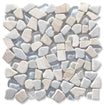
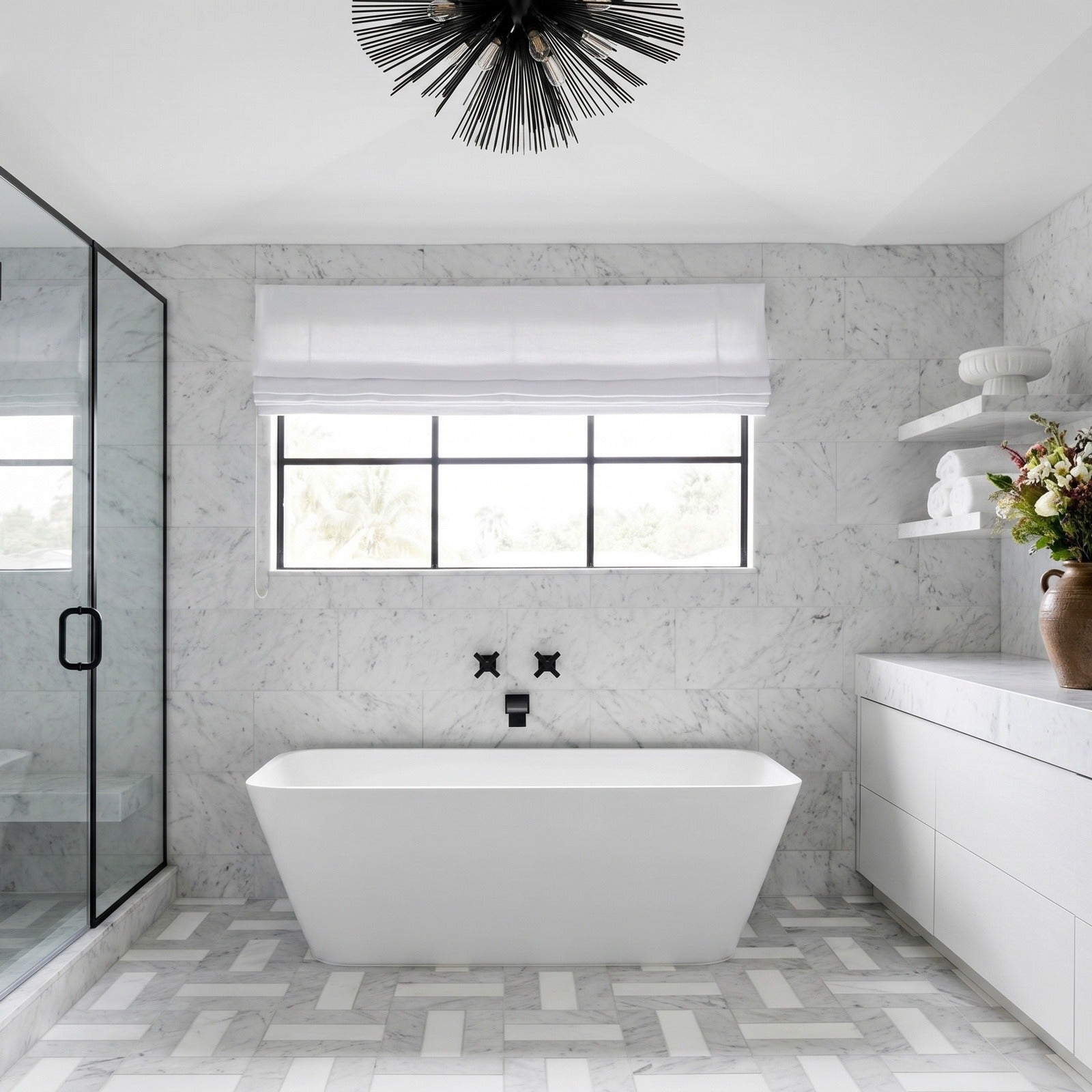
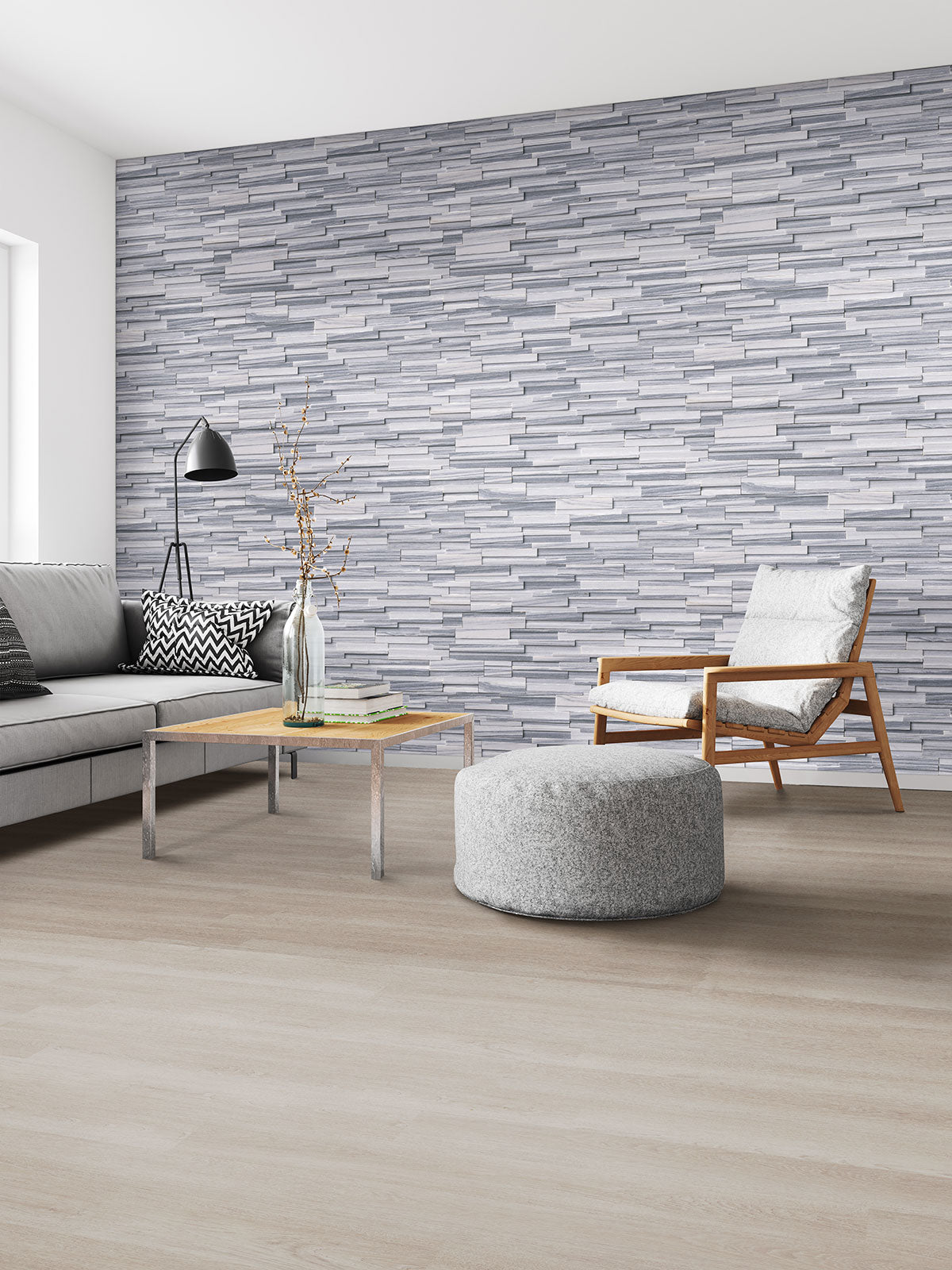
White is the most requested stone colour and the most versatile. White natural stone tile covers Thassos, Carrara, Calacatta and Bianco Dolomite — from near-pure white with almost no movement, to bold grey veining. Because white reflects light, it is the standard choice for small bathrooms and north-facing rooms. Silver stone tile sits just cooler, with a soft pewter cast that suits contemporary schemes.
Beige, Cream and Gold
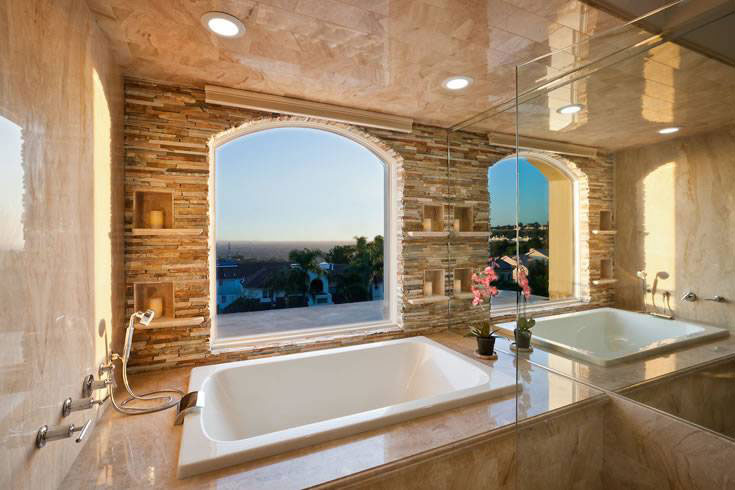
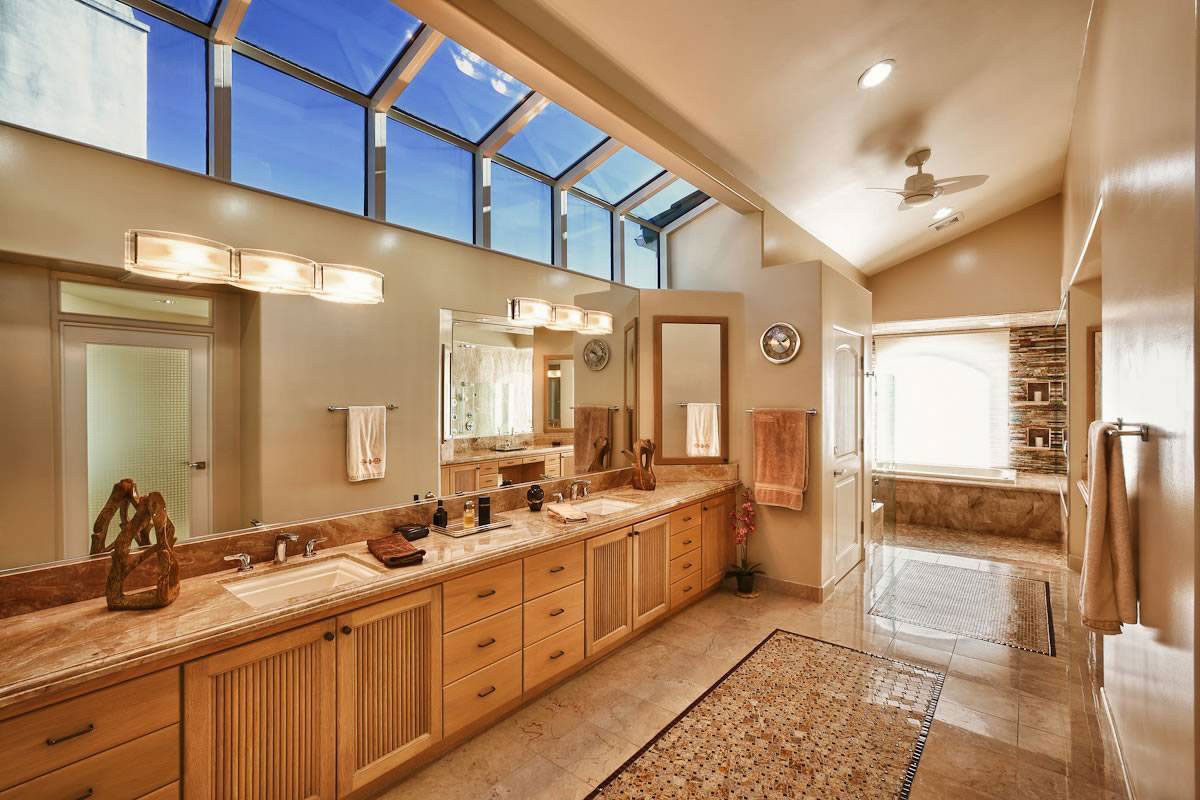
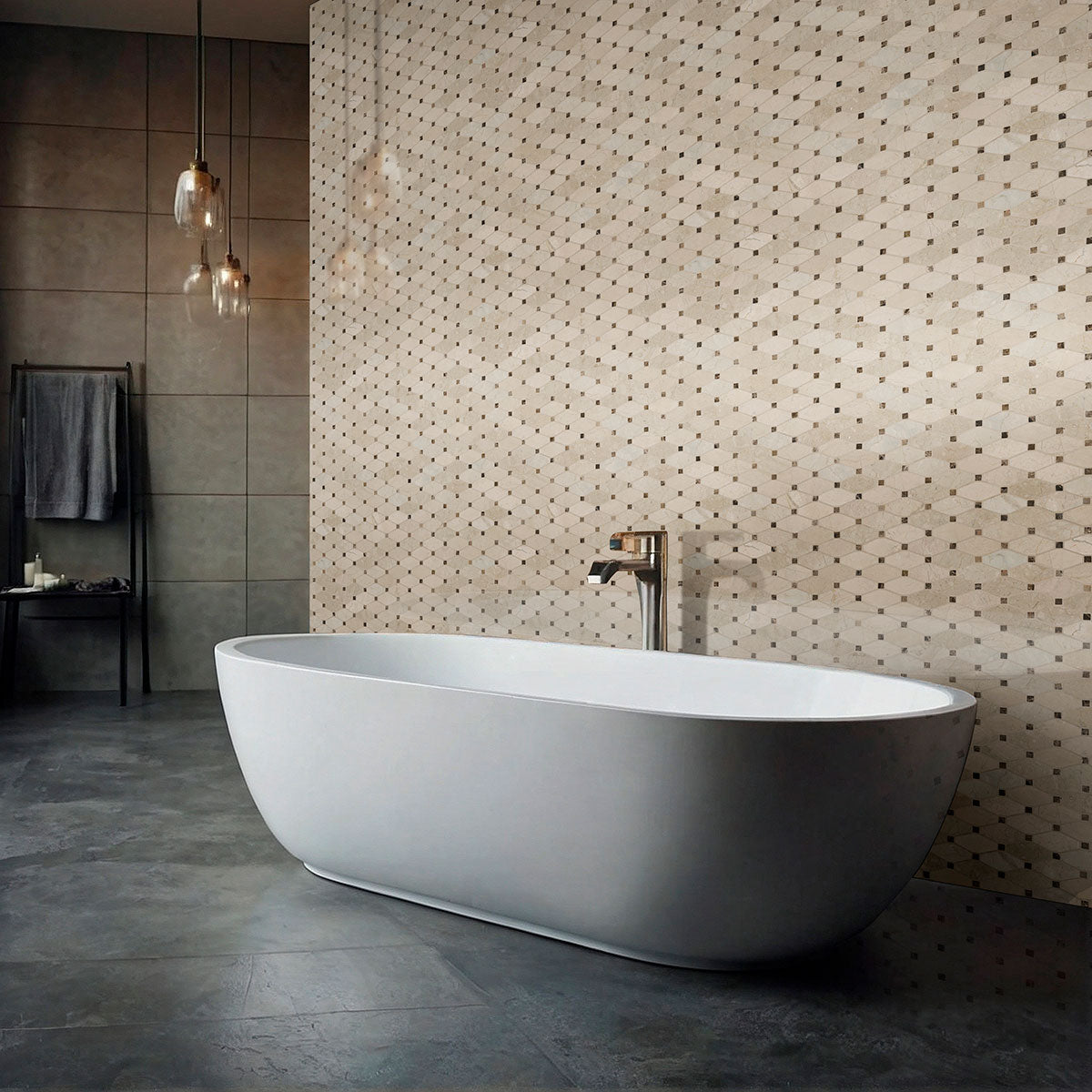
Beige stone tile is dominated by travertine and limestone — Durango, Ivory and Crema Marfil — and reads warm under both daylight and lamplight. Gold marble tile such as Calacatta Gold carries amber and honey veining through a pale ground, which is why it pairs so well with brass fittings and warm timber.
Dark Stone Colors: Black, Brown and Gray
Black
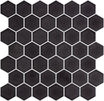
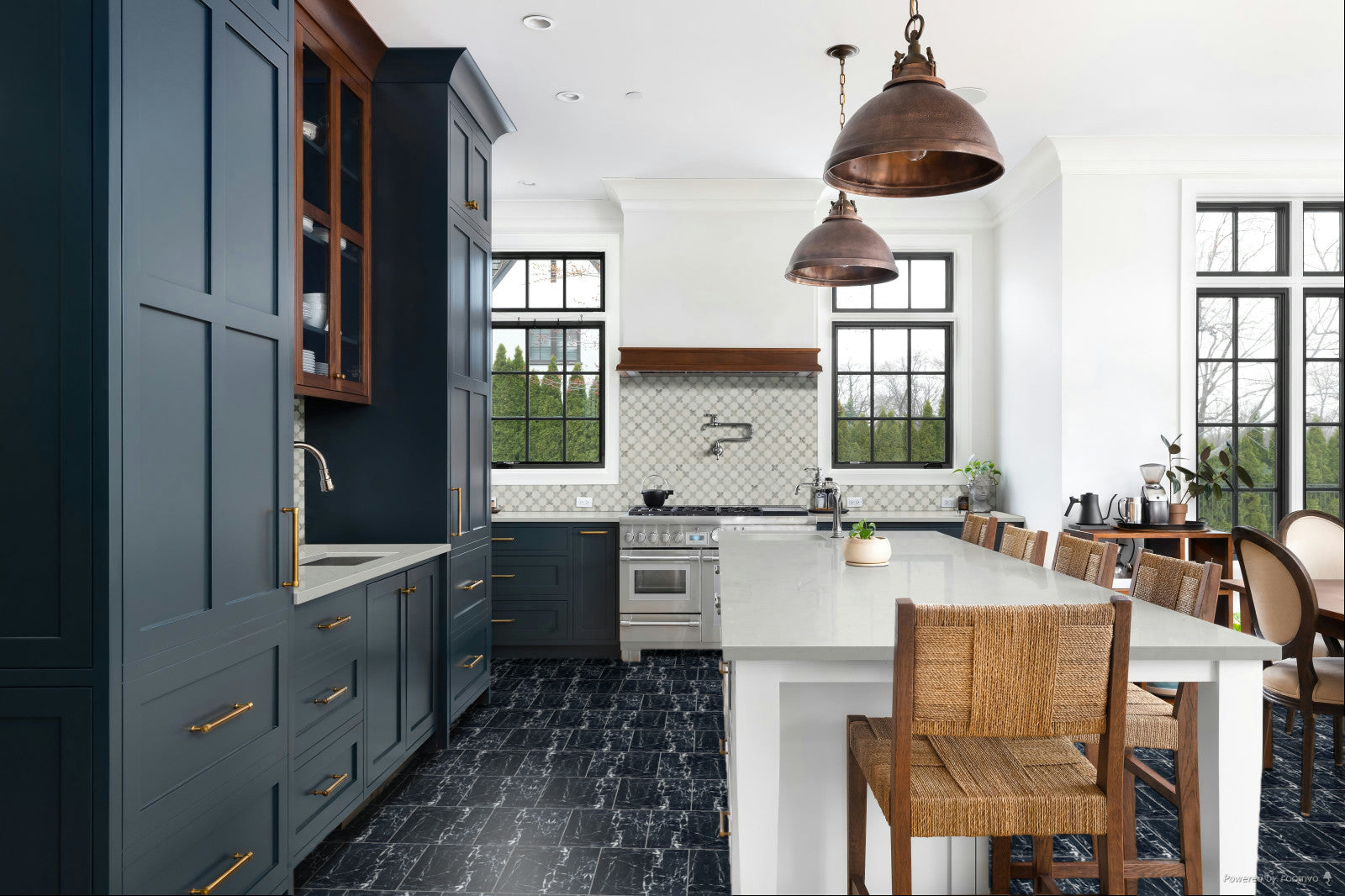
Black marble tile — Nero Marquina above all — gives the sharpest contrast available in natural stone. It is most often used as a feature: a shower niche, a border, a chequerboard floor. Honed black hides water spotting far better than polished, which matters in a wet area.
Brown and Gray
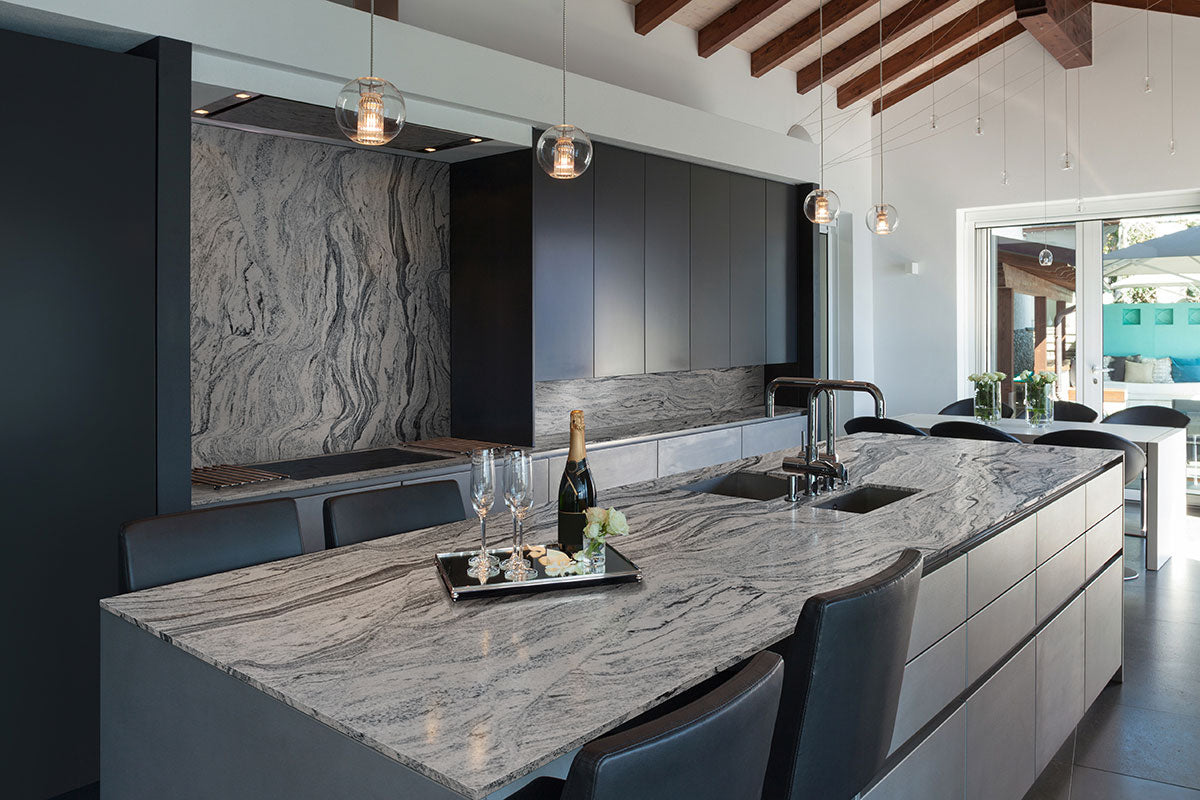
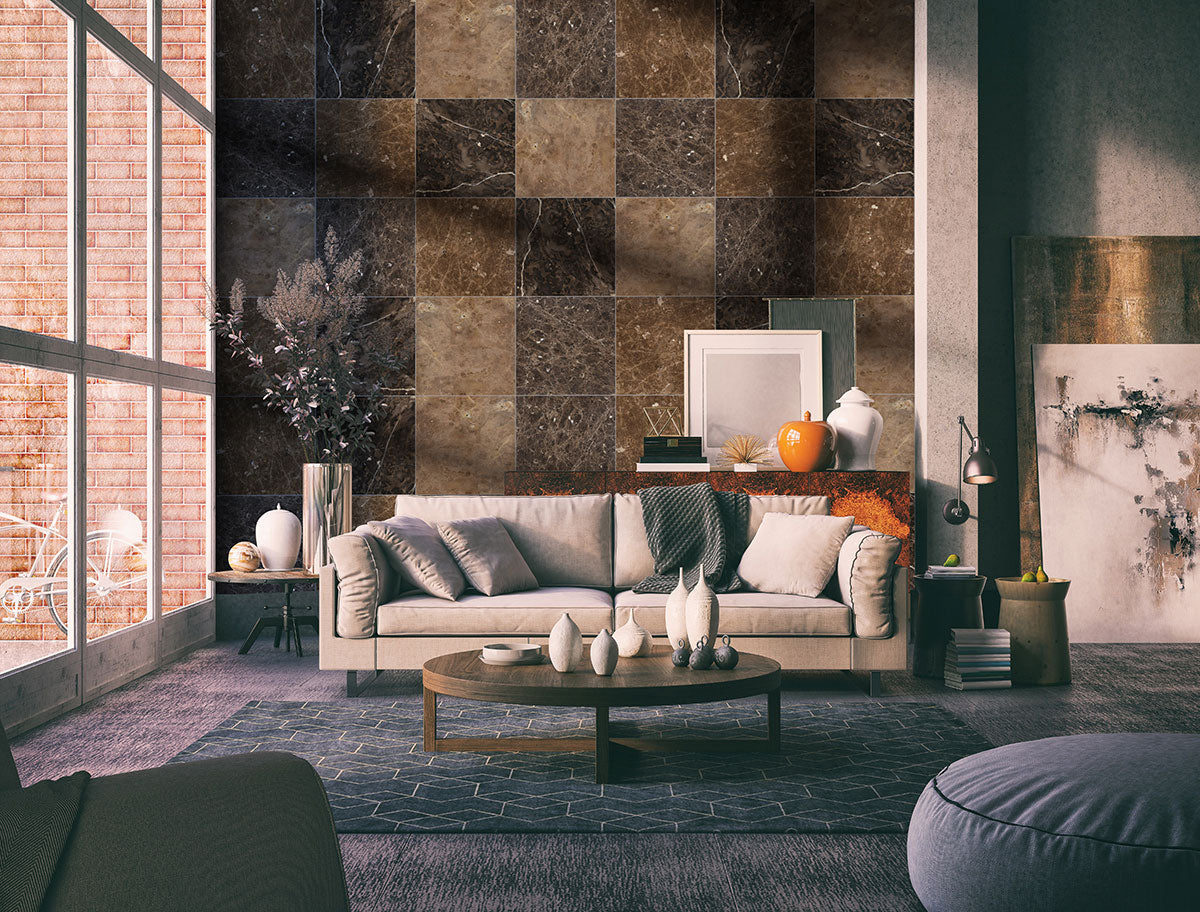
Brown marble tile covers Emperador Dark and Light and Walnut travertine, all with strong movement. Gray marble tile is our largest colour range and the most forgiving underfoot: Bardiglio and grey slate disguise dust and traffic in a way that white and black do not.
Accent Colors: Green, Blue and Yellow
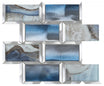
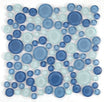
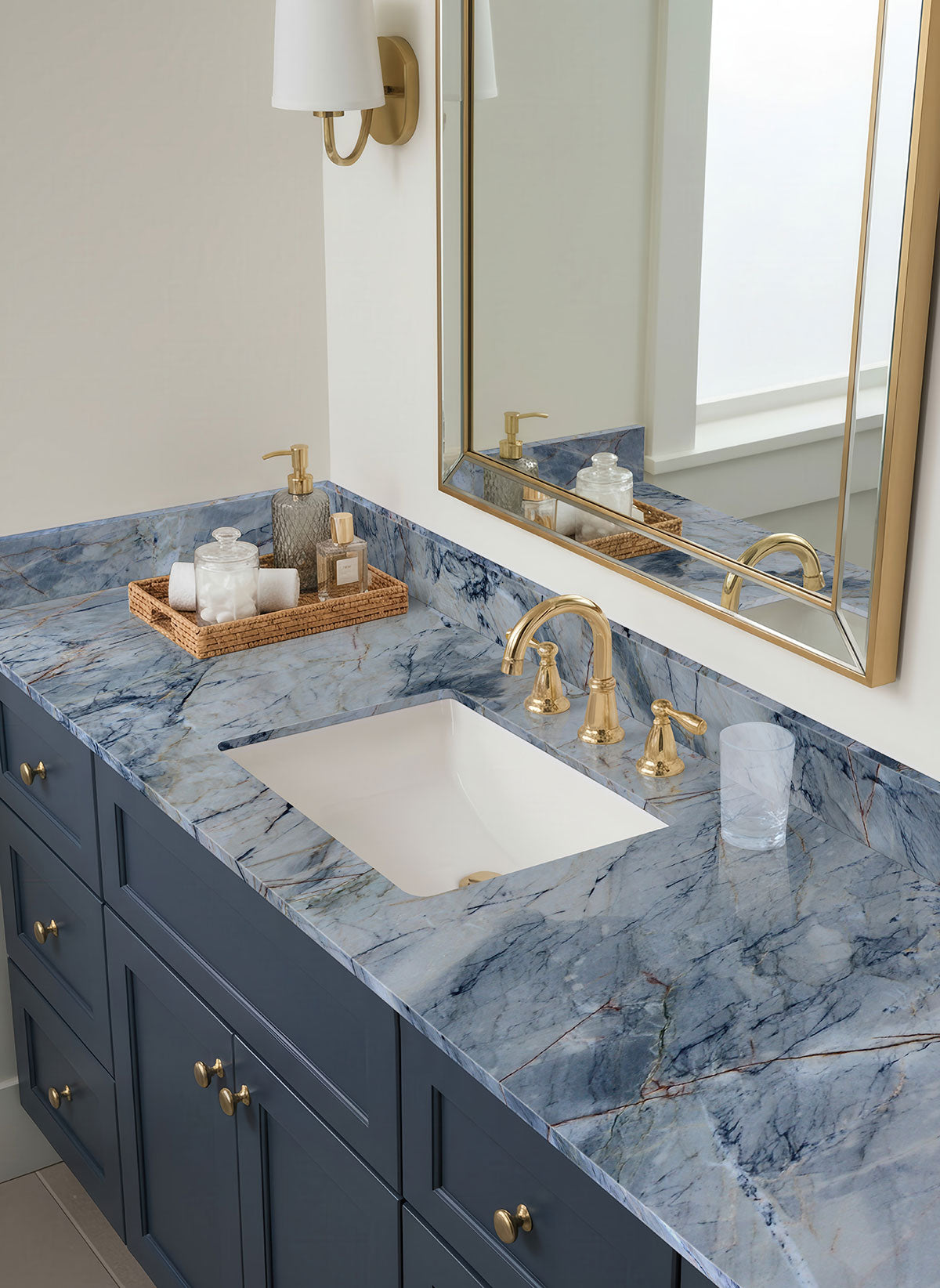
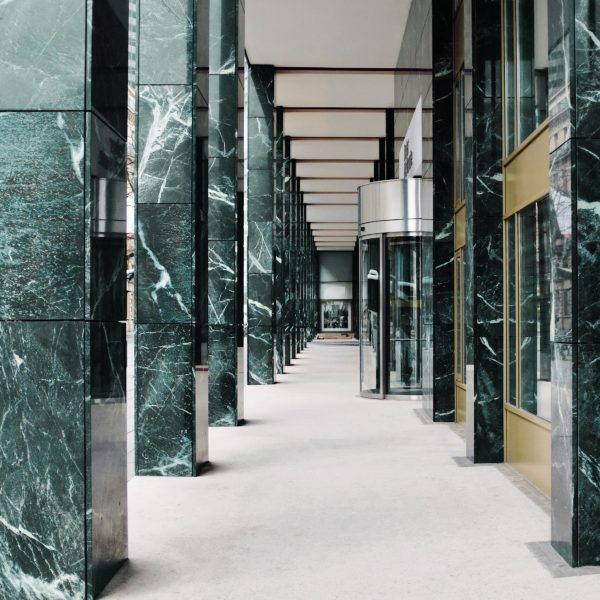
Colour outside the neutral range comes from specific quarries and stock moves quickly. Green marble tile — Ming Green and Verde — has returned strongly for bathroom walls and kitchen backsplashes. Blue stone tile runs from Gascogne Blue limestone to deep bluestone paving. Yellow stone tile is the rarest of the group and mostly appears in Mediterranean limestone.
Why the Same Color Looks Different Tile to Tile
Natural stone is quarried in blocks, and colour shifts as the quarry is worked. Two boxes of the same name bought months apart can differ noticeably in ground tone and vein density. This is expected and is not a defect.
- Order all material for a project in one go, from one batch.
- Add 10–15% overage so repairs later still match.
- Dry-lay and blend from several boxes before fixing, rather than working box by box.
- Ask for a sample from current stock, not a photograph.
Matching Stone Color to the Room
Light stone makes a small room feel larger and keeps a shower bright, but shows soap residue. Dark stone is dramatic on a feature wall and forgiving of dirt, but absorbs light and makes a small space read smaller. Mid-tone grey and beige are the practical middle for a floor that has to take traffic.
Finish changes perceived colour as much as the stone does. A polished tile looks darker and more saturated; the same stone honed looks paler and flatter. Always compare samples in the finish you intend to buy, in the room itself, at the time of day the room is used.
Free Design Consultation
Choosing the perfect tiles can be tricky. Speak with our experienced tile experts. We will guide you through selecting the best colors, patterns, and materials to match your style and needs.