


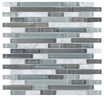
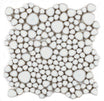
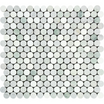
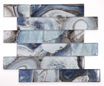
Shop Porcelain Tile by Room
Porcelain, Room by Room
Porcelain is the one tile material that can go almost anywhere in a house, but the requirements change from room to room. A bathroom floor needs grip when wet. A kitchen floor needs to survive a dropped pan. A patio needs to survive a frost. The tile that satisfies all three exists, but you will pay for capability you do not need if you do not narrow it down first.
Two numbers do most of the work. PEI rates surface wear from 1 (wall only) to 5 (commercial floor); most residential floors want PEI 3 or above. DCOF rates slip resistance; 0.42 or higher is the accepted threshold for a wet interior floor.
Wet Areas
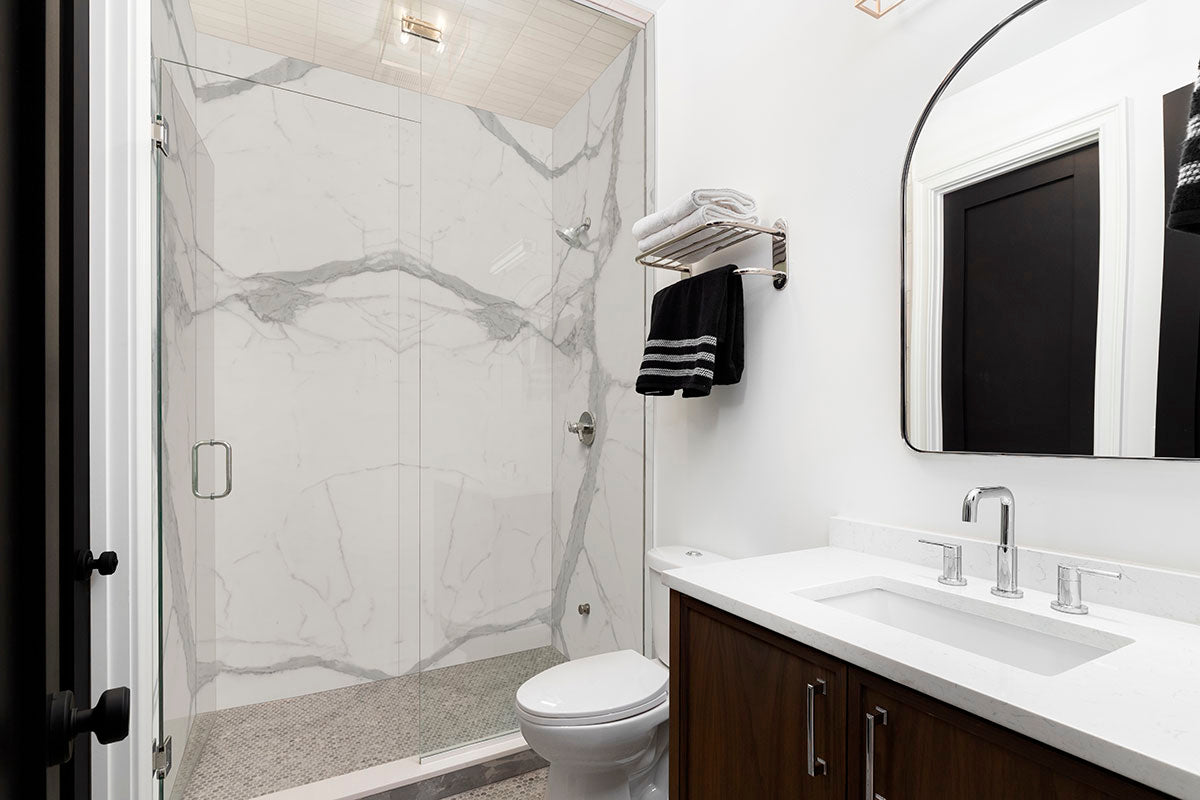
Bathroom
Porcelain bathroom tile is really two separate decisions. Walls can be anything, including polished tile, because nobody walks on them. Floors need a DCOF of 0.42 or better, which in practice means a matte or textured surface, or a small format where the grout joints supply the grip.
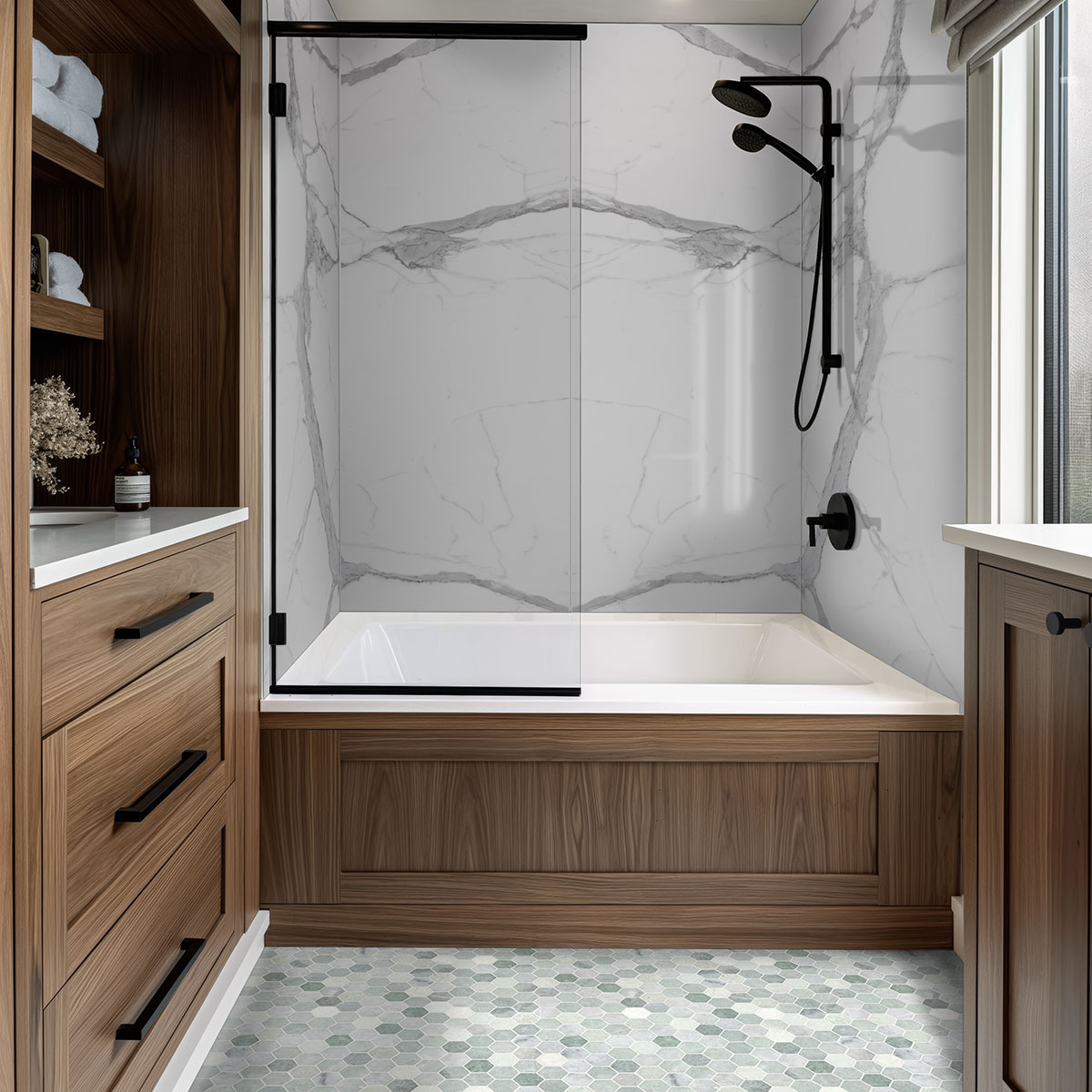
Shower
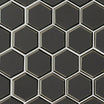
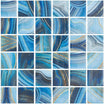
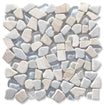
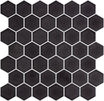
Porcelain shower tile has the strictest brief in the house. The floor falls towards the drain in at least two directions, so a mosaic sheet — hexagon, penny round or pebble — conforms where a large tile has to be cut into the slope. Shower walls have no such constraint, so it is common to run a large-format tile on the walls and a matching mosaic on the floor.
Living Space
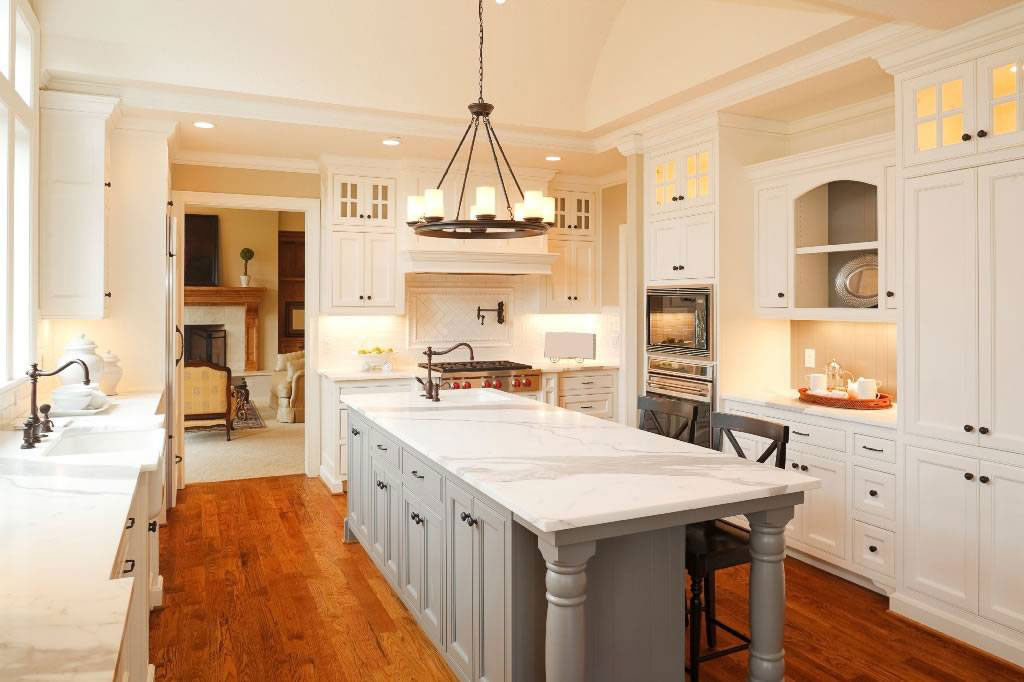
Kitchen
Porcelain kitchen tile on the floor wants PEI 4 and a matte finish, because a kitchen floor spends its life wet, greasy and walked on. Mid-tones hide crumbs and footprints better than either extreme. On the wall behind a hob, none of that applies — pick on looks and on how easily the surface wipes down.
Entryway
Porcelain entryway tile takes more abuse than any other floor in the house: grit tracked in from outside, water in winter, and every visitor. Specify PEI 4 or 5 and a mid-tone colour, since a very light or very dark entrance shows every footprint. Through-body porcelain, where the colour runs through the whole tile rather than sitting in a surface glaze, is worth the premium here because a chipped edge will not show pale.
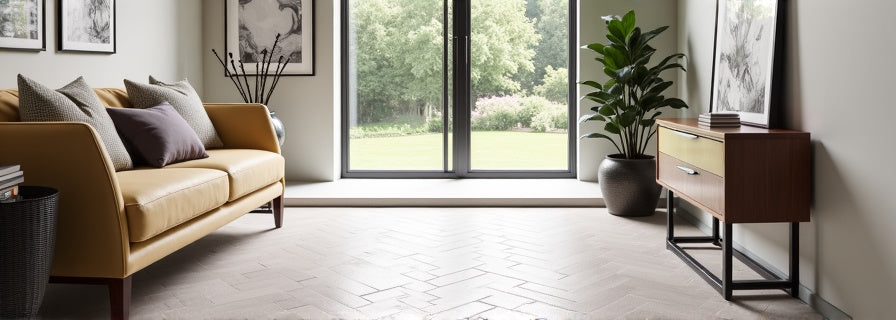
Living Room
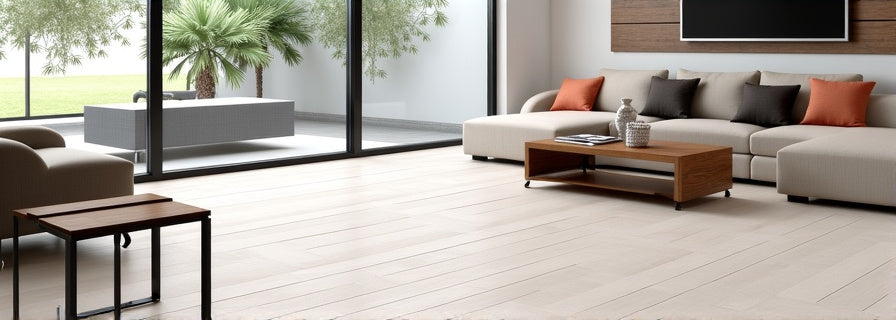
Porcelain living room tile is usually about warmth rather than performance, which is why wood-look planks dominate. Porcelain is the only way to get the appearance of timber over underfloor heating without any of the seasonal movement a real board would have, and it will not mark when a chair is dragged across it. Longer planks and fewer joints keep a large room calm.
Outside
Outdoor and Patio
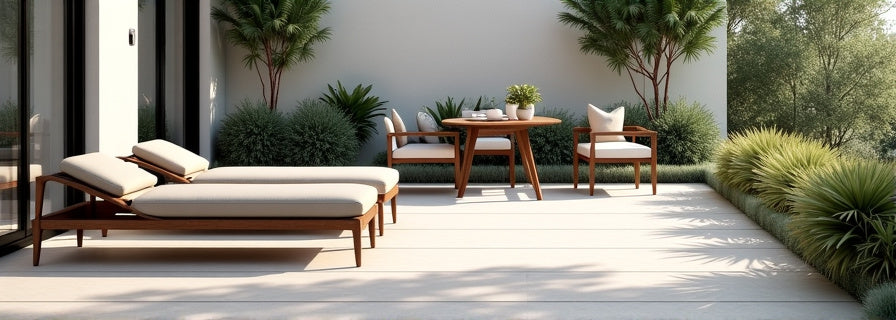
Outdoor porcelain pavers have one requirement above all others: they must be frost-proof, which means a water absorption at or below 0.5% so there is no moisture inside the body to freeze and split it. Porcelain meets this by definition; most other tile materials do not. Outside also demands a much higher slip rating than inside, so look for a structured or grip finish. Thicker pavers can be laid dry on gravel, sand or pedestals as well as bonded to a slab, which is what makes them practical for a terrace or a path.
Quick Reference
- Bathroom floor — PEI 3+, DCOF 0.42+, matte or small format.
- Shower floor — mosaic sheet, hexagon or penny round, so it follows the fall.
- Shower wall — any porcelain, including polished.
- Kitchen floor — PEI 4, matte, mid-tone.
- Entryway — PEI 4 to 5, through-body, mid-tone.
- Living room — wood-look plank, long formats, fine over underfloor heating.
- Outdoor and patio — frost-proof pavers with a structured finish.
Every tile is sold by the box with a per-square-foot calculator, so you can order the exact coverage each room needs plus a cutting allowance.
Free Design Consultation
Choosing the perfect tiles can be tricky. Speak with our experienced tile experts. We will guide you through selecting the best colors, patterns, and materials to match your style and needs.