

Shop Porcelain Tile by Pattern
Browse porcelain tile by the shape it is cut and laid in — hexagon, herringbone, chevron, basketweave, subway and more. Pick a pattern to see the full range.

Porcelain Tile Patterns Explained
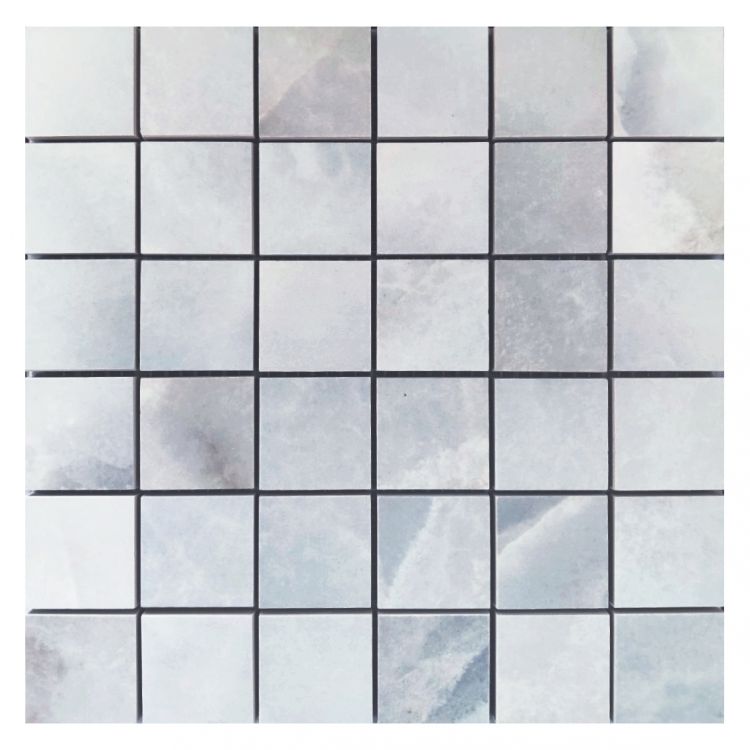
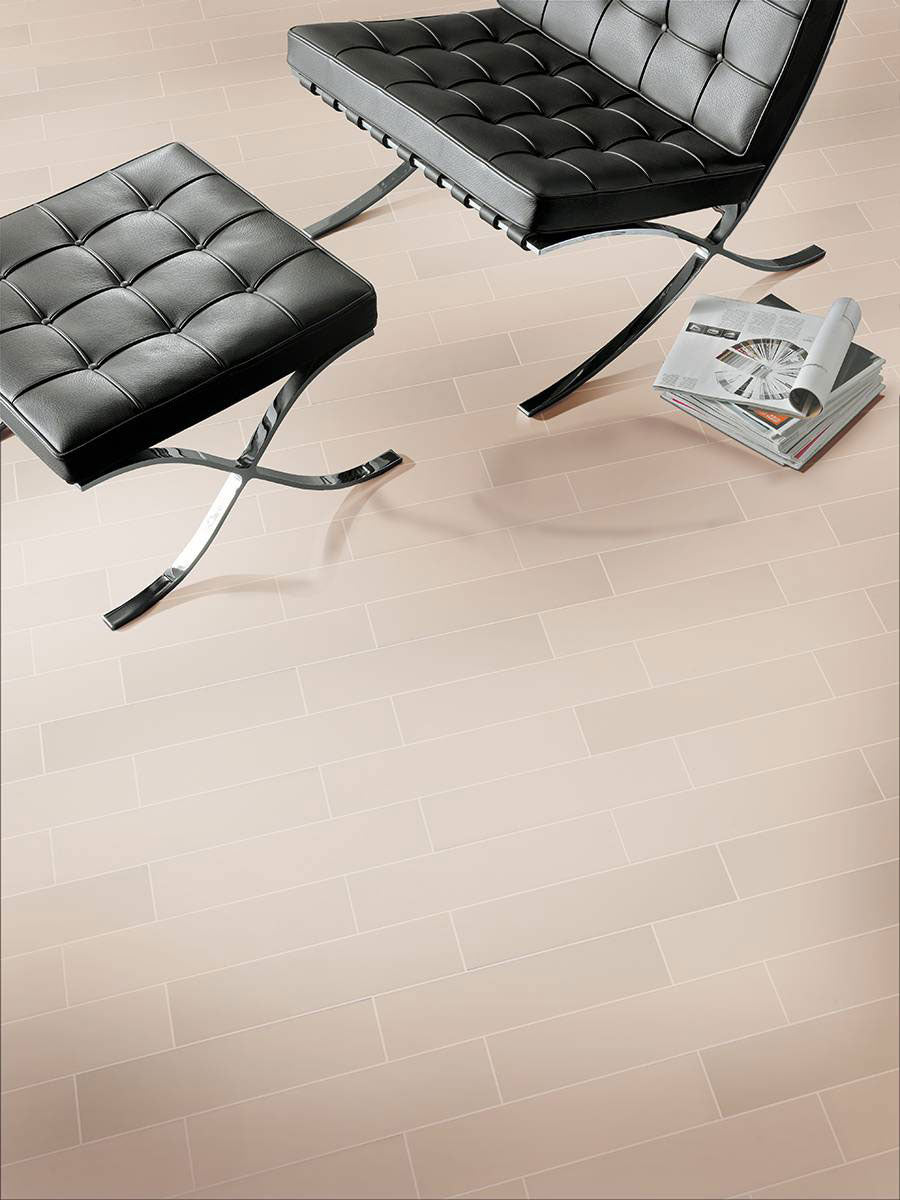
With porcelain, pattern means one of two things. Small formats — hexagon, penny round, basketweave, pebble — come pre-assembled on a mesh-backed sheet, so an intricate layout installs about as quickly as a plain square tile. Large formats are single pieces, and the pattern is created on site by the way they are set: herringbone, chevron, stack bond or a brick-laid offset.
Because porcelain is fired to a very low water absorption, every pattern below can be used on a wall, a floor, or in a wet area. The pattern is a design and a grip decision, not a durability one.
Geometric Patterns
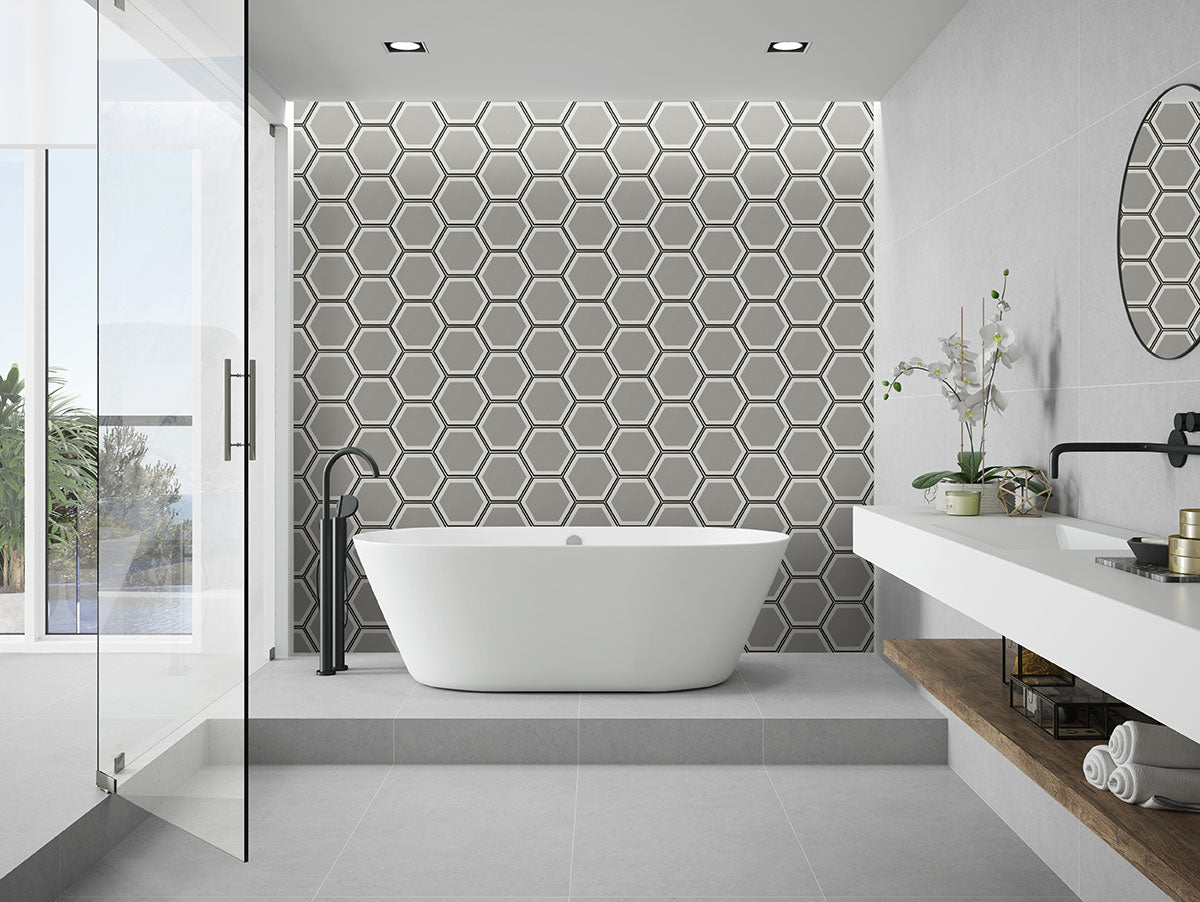
Hexagon
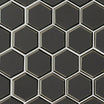
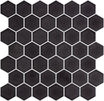
Hexagon porcelain tile is the default for shower floors, and it is the grout that does the work: six short joints per tile give far more traction underfoot than one long joint on a large format. Larger hexes, 8 inch and up, read as a graphic floor rather than a mosaic and are increasingly used in entryways and cloakrooms.
Herringbone and Chevron
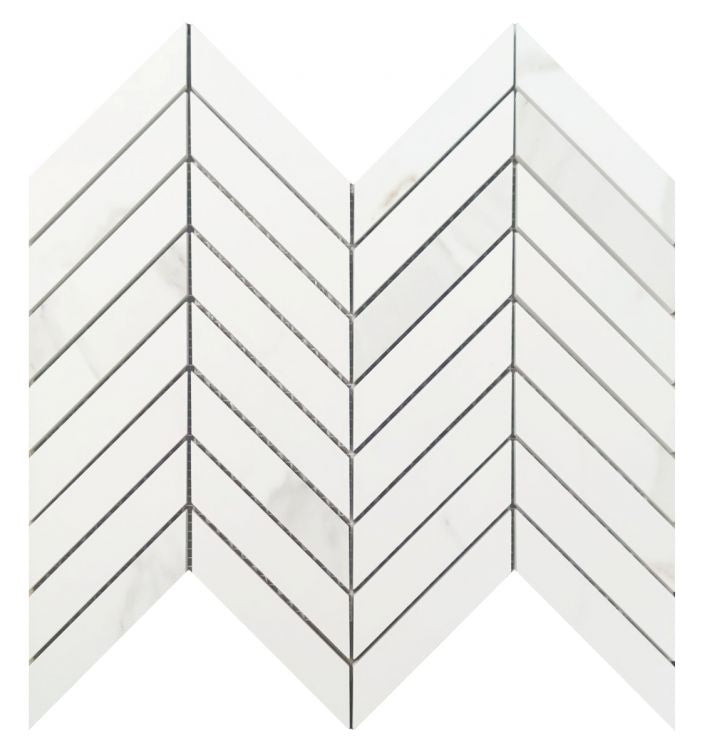
Herringbone porcelain tile sets rectangles at ninety degrees in a staggered zigzag. It is the pattern most often used to make a narrow hallway read wider, and it is the natural choice for wood-look planks. Chevron looks similar at a glance, but the pieces are cut at an angle so the points meet in a continuous V. Chevron is the more formal of the two and costs more, because of the mitred cut and the extra waste.
Basketweave
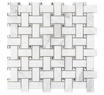
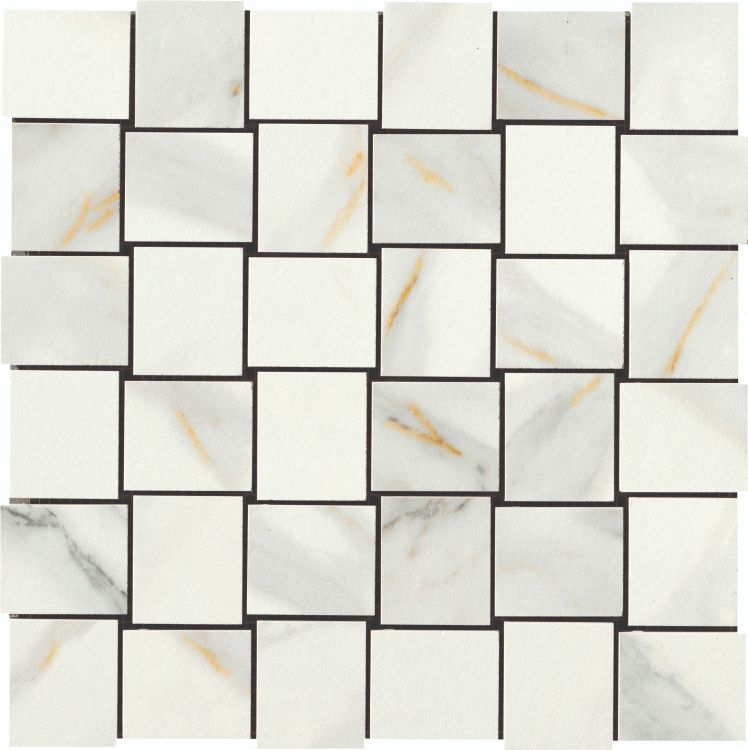
Basketweave porcelain tile alternates pairs of rectangles with a contrasting square for a woven look. It is a traditional bathroom floor pattern, and in porcelain it comes at a fraction of the price of the marble original while shrugging off water entirely.
Linear Patterns
Subway
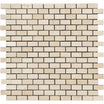
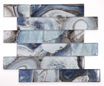
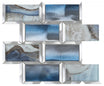
Porcelain subway tile is the safest pattern in tiling and the hardest to get wrong. Laid in a half-brick offset it is classic; stacked vertically it reads modern; set in a third-offset it hides a slightly uneven wall better than either. Porcelain subway holds a crisper edge than ceramic, which suits a tight grout joint.
Square and Stack Bond
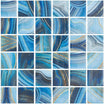
Square porcelain tile is the plainest option and the one that lets a dramatic marble-look or concrete-look surface speak for itself. Stacked in a grid it gives the calmest possible floor; offset, it reads more traditional.
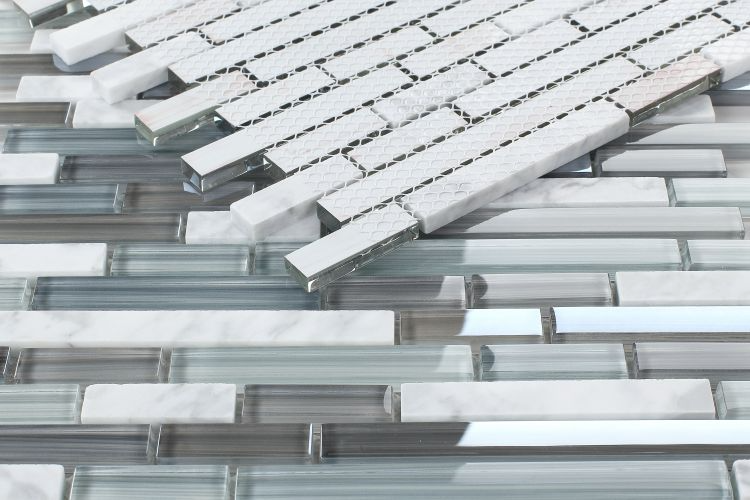
Random Linear
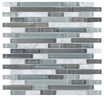
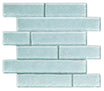
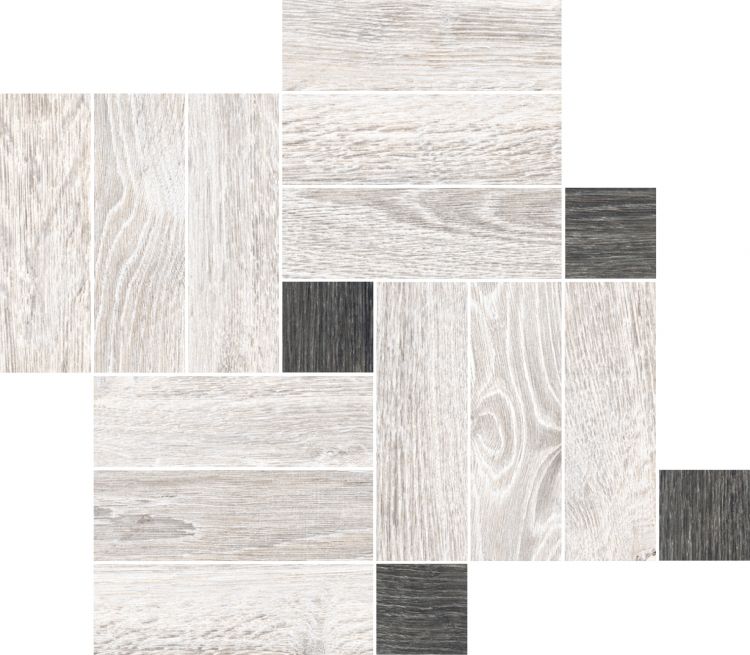
Random linear mosaics mix strip lengths, and sometimes thicknesses, within one sheet. Because the joints never line up, this pattern is unusually good at disguising a substrate that is not perfectly flat — useful on an older wall.
Small-Format Mosaics
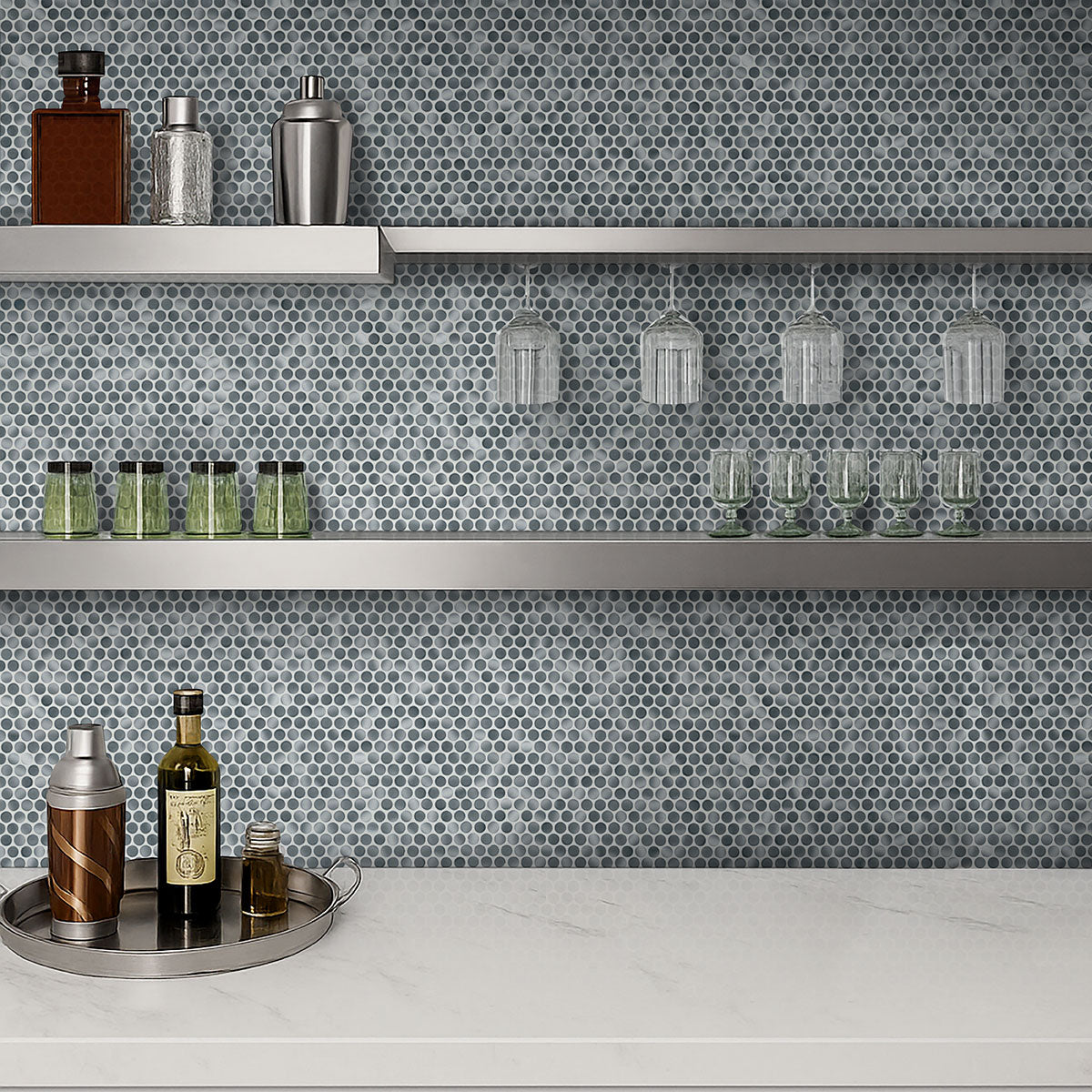
Penny Round
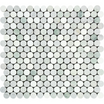
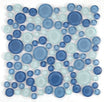
Penny round porcelain tile packs the most grout joints of any pattern we stock, which is why it keeps appearing on shower floors and wet-room thresholds. It also curves: a penny sheet will follow a shallow shower fall or a rounded step nose where a rigid tile cannot.
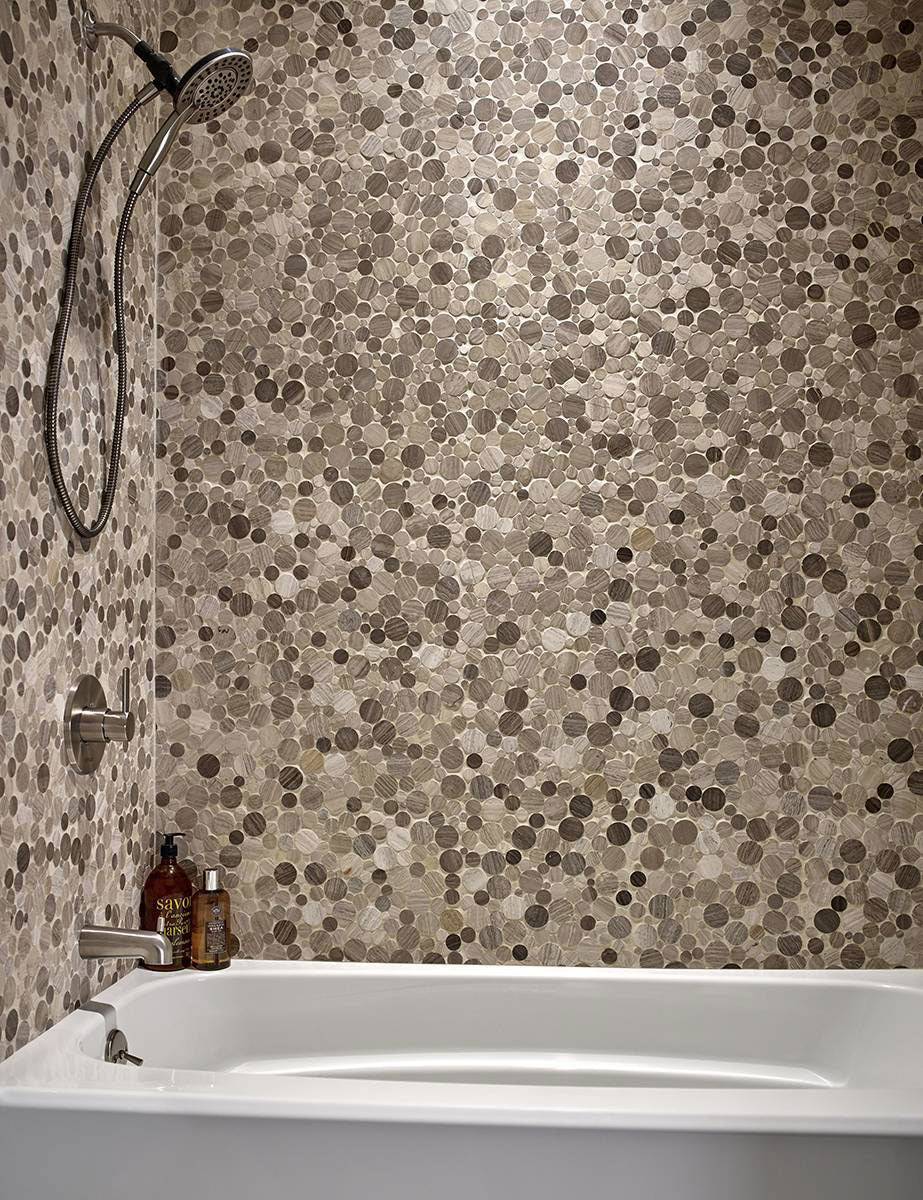
Pebble
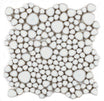
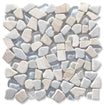
Pebble porcelain tile is the most forgiving pattern on a sloped floor. The irregular faces mean there is no straight line to go out of true, so it copes with a drain fall in two directions at once.
Decorative Blends
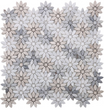
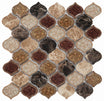
Decorative blends mix shapes, colours and finishes on one sheet — fish scale, arabesque, picket and banded strips. They are usually specified as a feature: a backsplash behind a range, a niche inside a shower, or a single wall in a powder room.
Choosing a Pattern for the Job
- Shower or wet-room floor — hexagon, penny round or pebble. More joints means more grip, and small sheets follow the fall to the drain.
- Kitchen backsplash — subway, herringbone or a decorative blend. All three are wall-only surfaces, so slip rating is irrelevant and you can choose purely on looks.
- Narrow hallway or galley kitchen — herringbone, run across the short dimension, to widen the room visually.
- Large open floor — square or a large-format plank in a light offset. Fewer joints keeps a big space calm.
- Uneven existing wall — random linear or pebble, both of which break up sightlines instead of exposing them.
Every pattern is sold by the box with a per-square-foot calculator on the product page, so you can order the exact coverage plus your cutting allowance. Order 10% over for a straight lay and 15% for herringbone, chevron or any diagonal.
Free Design Consultation
Choosing the perfect tiles can be tricky. Speak with our experienced tile experts. We will guide you through selecting the best colors, patterns, and materials to match your style and needs.